By: Kara Rubinstein Deyerin
A DNA surprise can feel overwhelming, but you do not have to process unexpected DNA results or decide what comes next alone.
In the click of a mouse, a DNA surprise can happen.
It may be one unexpected match. One parent-child connection that does not make sense. One surname you don’t recognize. One result that rearranges the story you carry about yourself, your family, or your origins.
For some, the discovery comes through a direct-to-consumer DNA test.
For others, it comes through a message from a newly discovered relative, a family confession, a medical question, or a genealogy search that uncovers something unexpected.
However it happens, the moment can feel overwhelming.
If this has happened to you, what I want you to know is you do not have to figure everything out today and you are not alone.
Step 1: Pause | Step 2: Find Support | Step 3: Further Research | Step 4: Contacting Matches
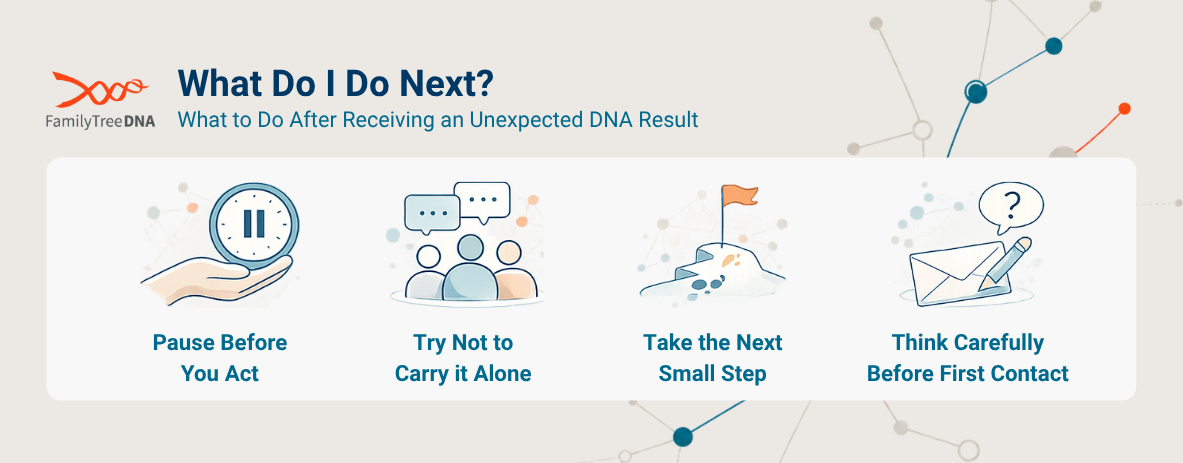
Pause Before You Act
Many who have a DNA surprise feel a need to do something immediately:
- message matches
- confront a parent
- call a sibling
- stay up all night trying to solve the mystery
That urgency is understandable. Your brain is trying to make sense of information that may have changed your understanding of your identity, life story, and relationships.
But if you can, pause. Take things slowly.
First reactions are powerful, but they are not always the best foundation for first contact, confrontation, or major decisions.
Your Reaction to an Unexpected DNA Result is Normal
In my work with Right to Know, I have seen people respond in many ways. Some cry. Some freeze. Some research for hours. Some feel relieved because something finally makes sense.
For me, I felt numb. I couldn’t look in the mirror because I no longer recognized the person looking back at me. I also felt like I had been duped—stupid for not seeing the truth that many others did.
None of these responses mean you are doing it wrong.
A DNA surprise can bring grief, anger, confusion, fear, validation, betrayal, curiosity, or relief. Sometimes people feel all of these things in the same day or at the same time. Sometimes they feel nothing at first, and the emotions come later.
You may find yourself replaying memories, looking at old photos, questioning medical decisions, or wondering who knew what and when. You may feel disconnected from the people who raised you, drawn toward people you have never met, or caught between loyalty and truth.
These reactions are common because this is not just about a test result.
It is about identity.
A DNA Surprise Is About More Than a Match
People who have not experienced a DNA surprise sometimes think of it as interesting family trivia. They may say things like, “It does not change who you are,” or “The people who raised you are still your family.”
Those things may be true, but they are not the whole truth.
A DNA surprise can affect your sense of self, belonging, family history, ethnicity, culture, medical information, and trust. It changes how you understand your childhood, your body, your relationships, and your place in your family system and the world.
For many, it is not just that one piece of information changed. It is that the foundation underneath many pieces of their life suddenly feels uncertain.
That is why the emotional impact can be so intense.
You are not overreacting if this feels big. It is big. It is okay to make this about you, your journey, and your healing.
Try Not to Carry It Alone
One of the hardest parts of a DNA surprise is that the people closest to you may not know how to respond.
Some may minimize it. Some may become defensive. Some may be grieving too. Some may worry that your search for truth means you are rejecting them. Others may want you to keep secrets or move faster than you are ready to move.
This is why support matters.
Find someone who can sit with you without trying to fix it. That might be a trusted friend, a support group, a therapist, a mentor, or a community of people who understand genetic identity issues.
If you seek therapy, look for someone familiar with adoption, donor conception, NPE experiences, DNA surprises, family secrets, grief, trauma, and identity. You should not have to spend all your emotional energy explaining why this matters.
Right to Know exists because people navigating these discoveries deserve support, education, resources, and community.
Find Support After Unexpected DNA Results
You may not know who to talk to first after a DNA surprise, especially if the discovery involves the same people you usually turn to for support.
Right to Know’s support page offers a place to start, with ways to connect with people and professionals who understand unexpected DNA results, NPEs, adoption, donor conception, and genetic identity questions.

Learn About DNA Surprises and Genetic Identity
When everything feels confusing, education can give you language, context, and a calmer way to understand what you are learning.
Right to Know’s education hub helps people impacted by DNA surprises explore genetic identity, family secrets, adoption, donor conception, and misattributed parentage through curated learning paths and educational resources.

Explore Resources for Coping With an Unexpected DNA Result
A DNA surprise can leave you with questions that come in waves.
Right to Know’s resources give you tools you can return to as you process, including guidance for understanding DNA results, organizing next steps, caring for yourself, preparing for contact, and learning more about genetic identity discoveries.

Join a Community for Ongoing Support
Sometimes the hardest part of a DNA surprise is feeling like no one around you fully understands what has changed.
Right to Know’s community offers an ongoing connection to people and resources centered on genetic identity, truth, and support.
I know how isolating this experience can feel, and I also know how powerful it is to sit with people who understand without needing the whole thing explained.
You are not alone and you do not have to prove that your experience is valid.
Take the Next Small Step
Healing and understanding usually happen in layers. You do not need to answer every question today.
Start small.
You may also find it helpful to use a journal created specifically for DNA surprises, NPEs, donor conception, adoption, or genetic identity discoveries. These guided journals can give you a place to sort through your thoughts, track what you’re learning, and process emotions before reaching out.
Before you reach out or make decisions:
- Save what you are seeing.
Take screenshots of matches, trees, and messages. DNA matches can disappear. Trees can be made private. - Write down your questions.
Notice what you are feeling. Find a support group. Listen to podcasts, read books, watch films related to DNA surprises. Take moments for yourself that center and ground you. Try to process your initial reaction before reaching out. - Move at a pace your nervous system can handle.
Some days you may want answers. Some days you may want a break. Some days you may feel strong, and other days one photo, name, or memory may knock the wind out of you.
That is part of the process.
A DNA surprise can change your understanding of your story, but it does not erase you. You are still here. You are still whole. And you deserve truth, care, and support as you decide what comes next.
Explore More Right to Know Resources
Right to Know provides education, support, advocacy, and community for people impacted by DNA surprises, adoption, donor conception, NPEs, and loss of genetic continuity.
We offer resources including:

Books on DNA Surprises
Explore a searchable collection of books related to DNA surprises, adoption, assisted reproduction, identity, parentage, healing, and family discovery.

Podcasts & Films
Find podcasts and films that explore different DNA surprise experiences, including NPEs, adoption, donor conception, and genetic identity discoveries.

Facebook Support Groups
Connect with private, compassionate communities where you can share your story, ask questions, and hear from others who understand your experience.

Interactive Glossary
Use Right to Know’s interactive glossary to understand common terms related to DNA surprises, NPEs, MPEs, adoption, donor conception, and genetic identity.

Community Events
Discover upcoming events from Right to Know and community members, including opportunities to learn, connect, and find support as you process.

Therapist & Professional Directory
Search verified providers who specialize in DNA surprises, NPEs, adoption, donor conception, and related genetic identity experiences.
You can learn more at RightToKnow.us
After you have had time to pause, learn, and find support, you may feel ready to contact a new genetic relative or respond to someone who contacted you.
Think Carefully Before First Contact
If your DNA results reveal a new genetic parent, sibling, child, or other close relative, you may want to reach out right away. Sometimes contact is welcomed. Sometimes it is complicated. Sometimes people need time.
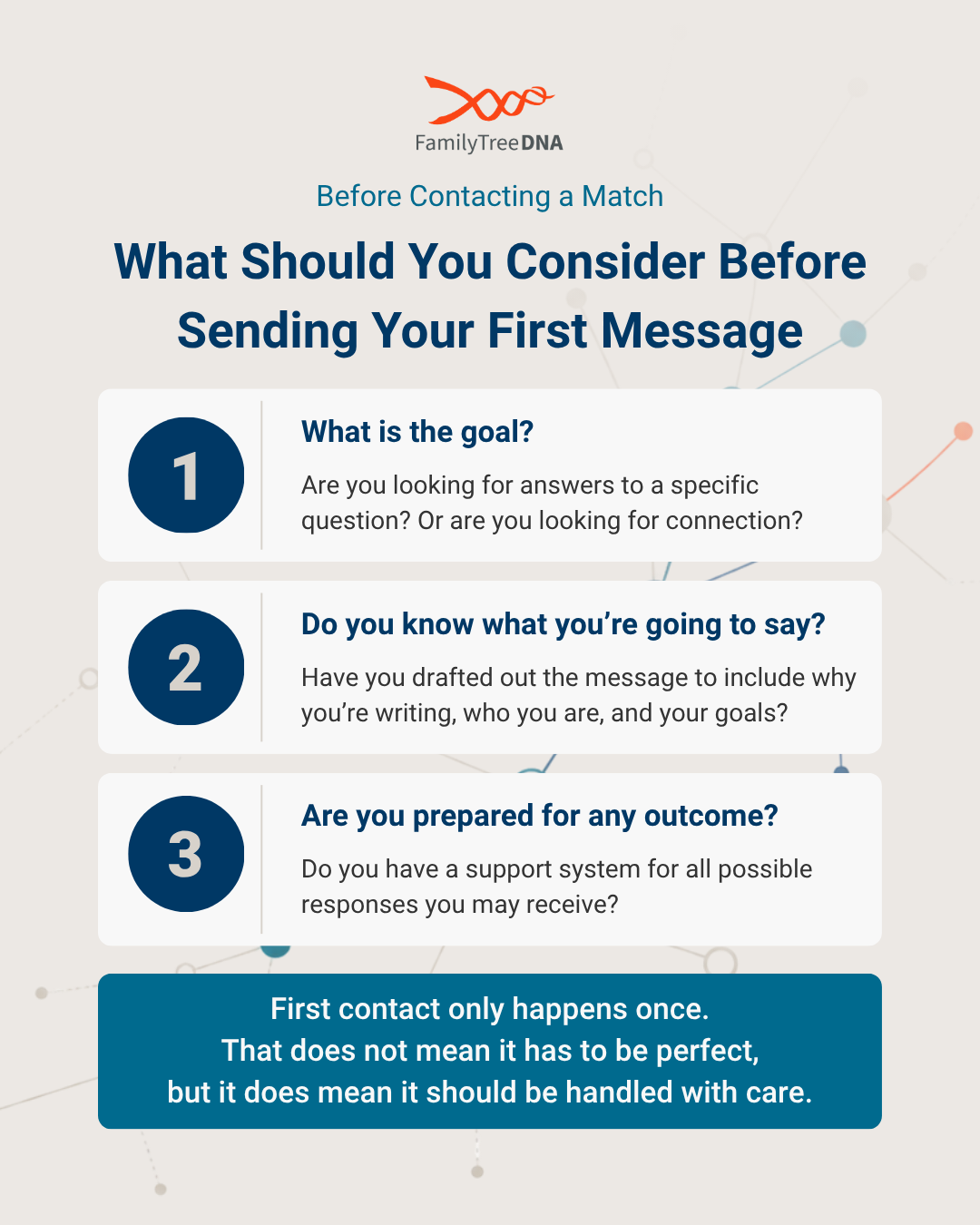
First contact only happens once.
That does not mean it has to be perfect, but it does mean it should be handled with care.
Before You Reach Out or Respond
Research the person before you reach out. Understanding a little about their life can help you approach them with care, rather than only from the urgency of your own discovery.
Before reaching out, think about what you want to say, what you are asking for, and how much information you are sharing at once. A message that feels clear to you may feel shocking to the person receiving it.
When You Are Ready to Reach Out
A good first message is usually calm, brief, and respectful. It should not demand an immediate response. It should leave room for the other person to process the information. You might say:
- Share why you’re writing: Share your significant genetic matches and how you’re likely related.
- Share about yourself: Write a brief paragraph with highlights of your life.
- State what you’re seeking: Let them know you would like help confirming how you might be related.
You do not need to tell your entire story in the first message.
Right to Know also offers outreach advice and downloadable sample letters that can help you prepare before making contact.
If You Have Been Contacted First
On the other hand, if you are the person being contacted, remember that the person reaching out may have spent days, weeks, months, or years building the courage to send that message.
Care matters on both sides.
After the First Message
Prepare yourself for different responses before you send it. Some people respond with warmth. Some ask for time. Some deny the connection. Some never respond.
I struggled with rejection from both the family who raised me and my new genetic family. Give yourself time to grieve over lost possibilities. And remember, while a response may affect you deeply, it does not determine your worth or whether you deserve answers.
And responses can change over time.
Wait two weeks after delivery before reaching out again. If they need time, give them grace.
Family Dynamics Can Be Complicated
DNA surprises do not happen in isolation. They ripple through families.
A discovery may impact the person who tested, the parents who raised them, genetic parents, siblings, spouses, children, grandparents, and extended relatives. It may bring up secrecy, shame, grief, infertility, assault, affairs, or choices made under very different circumstances.
That does not mean the truth should stay hidden. It means the truth may need to be approached with care.
You may discover that different family members have different versions of the story. Some may have known. Some may not. Some may be relieved the truth is out. Some may feel exposed, afraid, angry, or protective.
You are allowed to seek your own truth, even when other people are uncomfortable. You are also allowed to set boundaries around how much emotional caretaking you can do for others while you are still trying to make sense of your own experience.
Different DNA Surprise Experiences Can Share Common Needs
DNA surprises can happen in many ways. Each experience is different.
An adoptee, a donor-conceived person, a person with an NPE, and a newly contacted genetic parent or sibling may all have different histories, legal realities, and emotional needs.
But many share common themes: the need for truth, accurate information, medical information, support, and the ability to understand where they come from.
At Right to Know, we believe genetic identity and continuity matter because they shape a person’s story, health, and sense of self.
Knowing the truth about your origins, your genetic connections, or who your children are should not depend on secrecy, stigma, or someone else’s comfort.
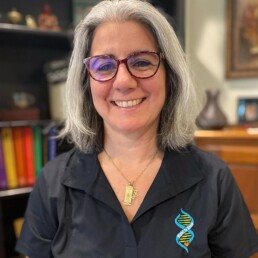
About the Author
Kara Rubinstein Deyerin
Founder and CEO, Right to Know
Kara experienced her own DNA surprise, an NPE that reshaped her understanding of her genetic identity, ethnicity, family story, and sense of belonging. That experience led her to found Right to Know, a nonprofit organization dedicated to supporting people impacted by DNA surprises, adoption, donor conception, NPEs, misattributed parentage, and loss of genetic continuity.
Kara is an advocate, speaker, writer, and educator whose work focuses on genetic identity, truth, transparency, and the lifelong impact of family secrets. She has helped develop resources, support programs, educational materials, and legislative advocacy efforts for people navigating DNA discoveries and the family systems affected by them.