By: Courtney Eberhard
A behind-the-scenes look at DNA Academy, the East Coast Genetic Genealogy Conference’s signature Saturday night panel, with host Mags Gaulden.
Every year, one Saturday evening at the East Coast Genetic Genealogy Conference (ECGGC) belongs to DNA Academy. A panel discussion and expert presentations built for genealogists at every level — from total beginners to seasoned researchers. Now in its fifth year, DNA Academy has become one of the conference’s signature events, hosted by Mags Gaulden alongside a rotating lineup of genetic genealogy’s most recognizable names.
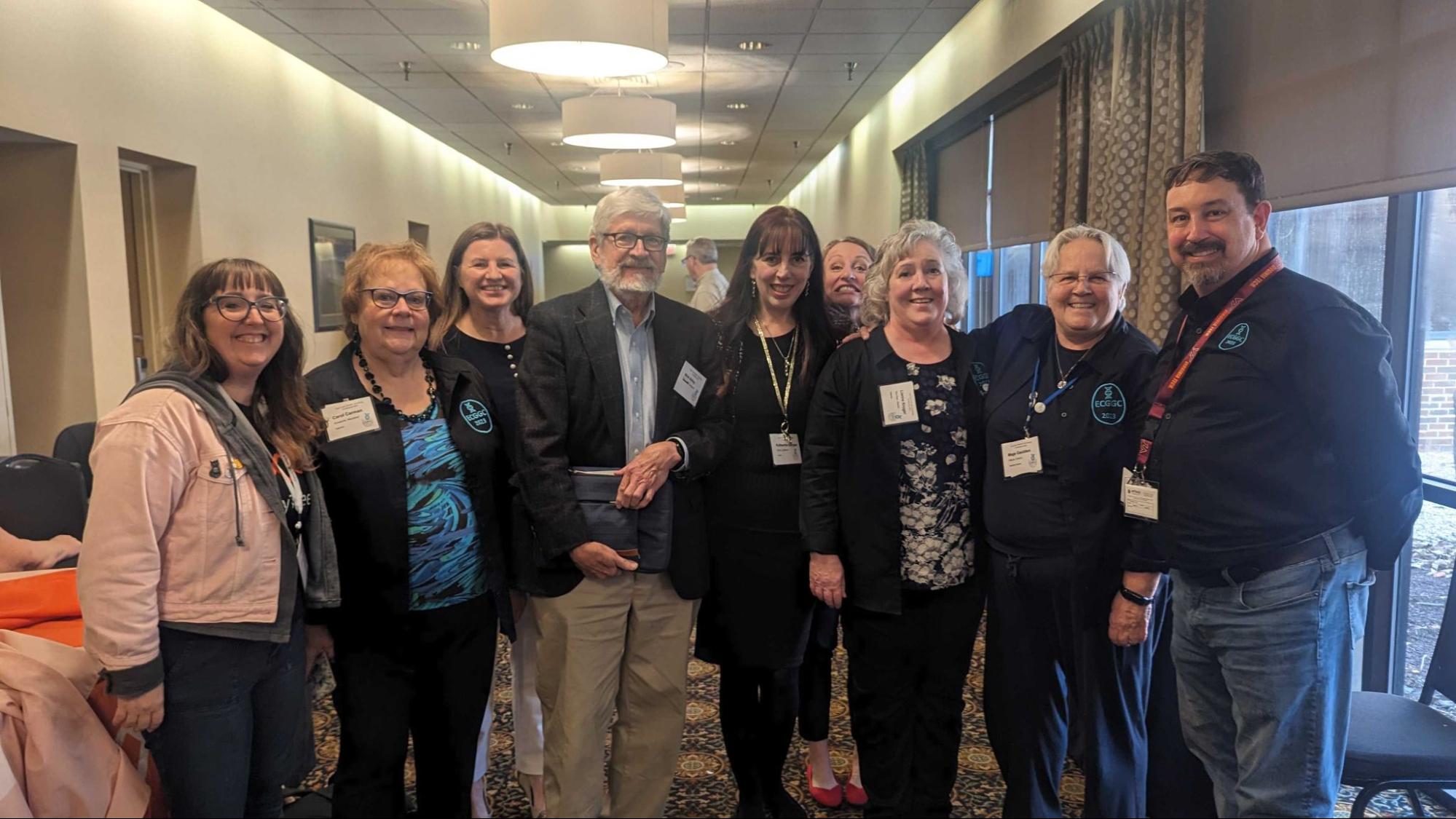
We sat down with Mags ahead of this year’s conference to talk through DNA Academy’s origin story, what’s planned for 2026’s panel with presentations by Dave Vance and Roberta Estes, and why she thinks it might be the single best reason to show up.
What is the DNA Academy?
DNA Academy is a Saturday evening tradition at the East Coast Genetic Genealogy Conference (ECGGC), combining a live Q&A panel with in-depth presentations from genetic genealogy experts. Now in its fifth year, it takes place every year on Saturday evening after dinner and is included with standard conference registration — available to attend either in person or virtually.
Quick Facts:
- What it is: A Q&A panel followed by expert presentations, covering DNA testing topics for genealogists of all experience levels
- When: Saturday evening, after dinner — same time slot every year
- How long it’s been running: 5 years
- Cost: Included with ECGGC registration — no separate ticket needed
- Format: In-person and virtual, both fully supported
- Replay availability: Streams on vFairs through December 31, 2026
What Is the East Coast Genetic Genealogy Conference?
The East Coast Genetic Genealogy Conference (ECGGC) started small: a handful of rented rooms and an in-person team, born in the middle of COVID when genealogists still found a way to gather. Five years later, it’s grown into something bigger — but it hasn’t lost the thing that made it work in the first place. “Intimate. High level for all levels,” is how host Mags Gaulden describes it, and that’s still the goal today: a conference where beginners and seasoned researchers alike can find something worth sticking around for.
This year, ECGGC heads to Boston, timed around the city’s 250th anniversary celebrations. Whether you’re flying in or logging in from home, Mags says nobody’s getting the short end of the experience — the vFairs virtual platform delivers a genuinely immersive experience, while in-person attendees get the added bonus of hallway networking.
The Conversation That Started DNA Academy
DNA Academy didn’t start as part of a conference at all — it started as a conversation. Back in 2019, at a FamilyTreeDNA Admin Conference, Mags Gaulden found herself talking with Roberta Estes, Tim Jansen, and David Pike about a gap they kept running into. Events like FamilyTreeDNA’s ICGG are great for Group Project Administrators deep in the technical weeds of DNA analysis, but there wasn’t really a space for something more high-level — a place to talk about working with DNA without needing a data science background to keep up. So when ECGGC was built from the ground up, Mags made sure DNA Academy came with it.
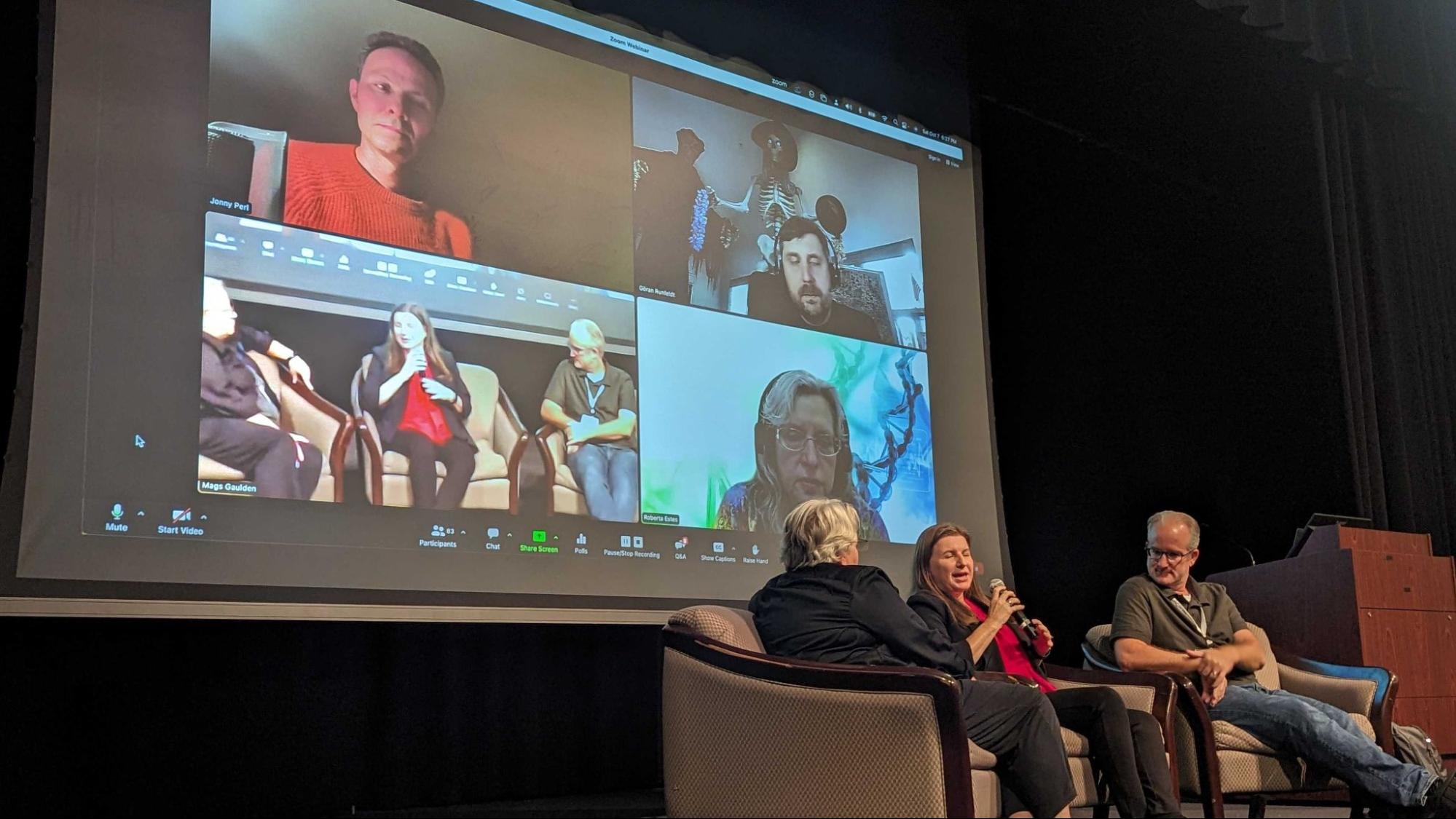
The Saturday evening timeslot was practically an accident of ambition. The team originally wanted the conference to run 24 hours a day (an idea that, unsurprisingly, didn’t survive contact with reality). Instead, they landed on filling the after-dinner lull — the time slot when most conference attendees scatter to restaurants or their hotel rooms. Some of the event staff worried the first DNA Academy might flop simply because of when it was scheduled. Five years later, it’s never once been poorly attended.
As for the format itself? I joked with Mags and asked: “It’s the same concept, but with more chairs?” Mags agreed, and then told me why: chairs have been a genuine plot point for DNA Academy. One year, the venue promised a full panel setup backstage, only for Mags and the team to discover there were, in fact, zero chairs anywhere in sight. What followed was a full-blown scavenger hunt through hallways, classrooms, and bathrooms, scrounging up seven or eight mismatched chairs just in time for showtime. From the audience, you’d never have known.
Meet This Year’s DNA Academy Presenters: Dave Vance and Roberta Estes
Dave Vance and Roberta Estes round out this year’s presentations after the panel discussion, and the pairing makes sense once you look at what each of them brings. I mentioned to Mags that Dave felt like the natural pick to talk about Next-Generation Sequencing (NGS) — FamilyTreeDNA’s approach to NGS testing for autosomal DNA, which makes him about as go-to as it gets on the subject. She agreed without hesitation. Roberta, meanwhile, she described in her own words: one of the most prolific writers in genetic genealogy, with a rare ability to make complex concepts click for readers at any level.
“My talk covers our new Family Finder NGS-based test — how it differs from the microarray testing we’ve used until now, why we made the switch, and the kinds of capabilities we hope this technology opens up down the road,” Dave says. (To be clear: that’s about future possibilities, not a preview of upcoming products.)
Dave’s presentation on NGS testing for autosomal DNA has Mags personally excited — she’s looking forward to learning right alongside the audience, particularly around whether this technology could finally push past the long-standing “4th or 5th great-grandparent barrier” in autosomal results.
Roberta’s presentation, “Using Ancient Connections to Unlock Genealogy,” tackles a question a lot of testers don’t think to ask: which of your ancient DNA matches might actually be ancestors, versus distant “cousins”? Through a handful of real case studies, she’ll walk through what Ancient Connections can reveal about your family that no other tool really can — proof, as she puts it, that Ancient Connections aren’t always so ancient after all. It’s a theme she returns to often: ancient DNA is engaging on its own merits, but it’s also a legitimate tool for breaking through genealogical brick walls.
The Real Reason DNA Academy Works: Banter First, Learning Second
“The banter and the intimacy of the panel” — that’s Mags’s answer, immediately, when asked what she loves most about hosting DNA Academy. She compares it to the warm-up comedian who gets a live studio audience laughing before the taping starts: the panel’s energy primes the room for everything that follows.
That intimacy is the whole pitch, as far as she’s concerned. DNA Academy puts attendees in the same room as some of the biggest names in genetic genealogy — Janine Cloud, Diahan Southard, Roberta Estes, Dave Vance, Jennifer Zinck, and more — and strips away the intimidation factor. By the time the panel wraps, those names aren’t untouchable experts anymore. They’re just people you already feel comfortable walking up to in the hallway for the rest of the conference.
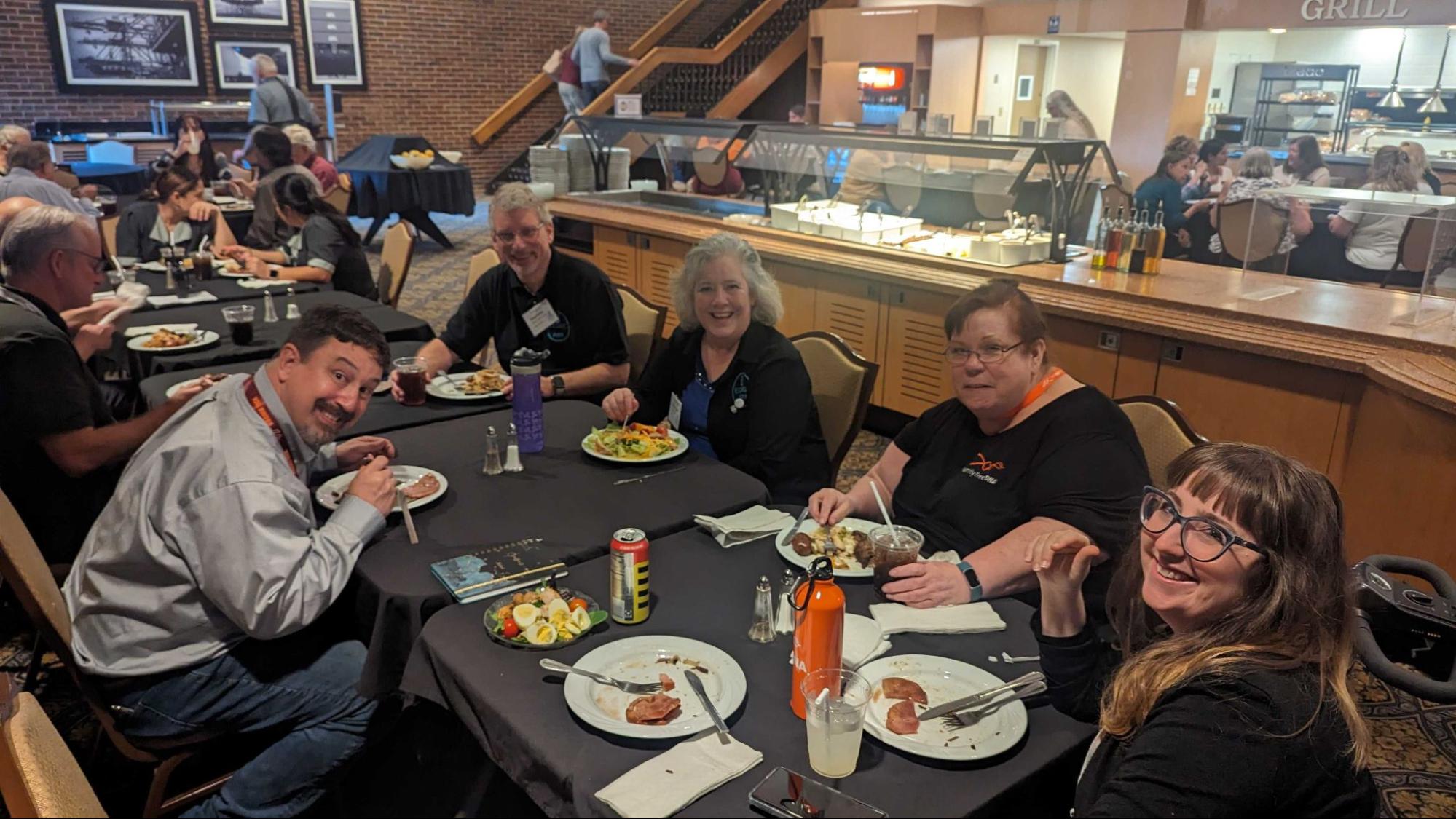
And once you’re there, Mags has one more piece of advice: don’t skip the sessions. ECGGC has built a reputation for landing serious talent partly because it covers speaker travel costs — a perk plenty of conferences skip, and one that translates directly into a stronger lineup for attendees.
Should You Attend ECGGC In Person or Virtually?
Mags will tell you in-person has an edge — there’s a community feel to being in the room that’s hard to fully bottle. And having attended in person myself, I get it. One year, the conference ran a full scavenger hunt woven around a family tree — hunting down birth dates, death dates, surnames, all of it, with the entire room working the puzzle together. It’s the kind of thing that only really works when everyone’s shoulder to shoulder.
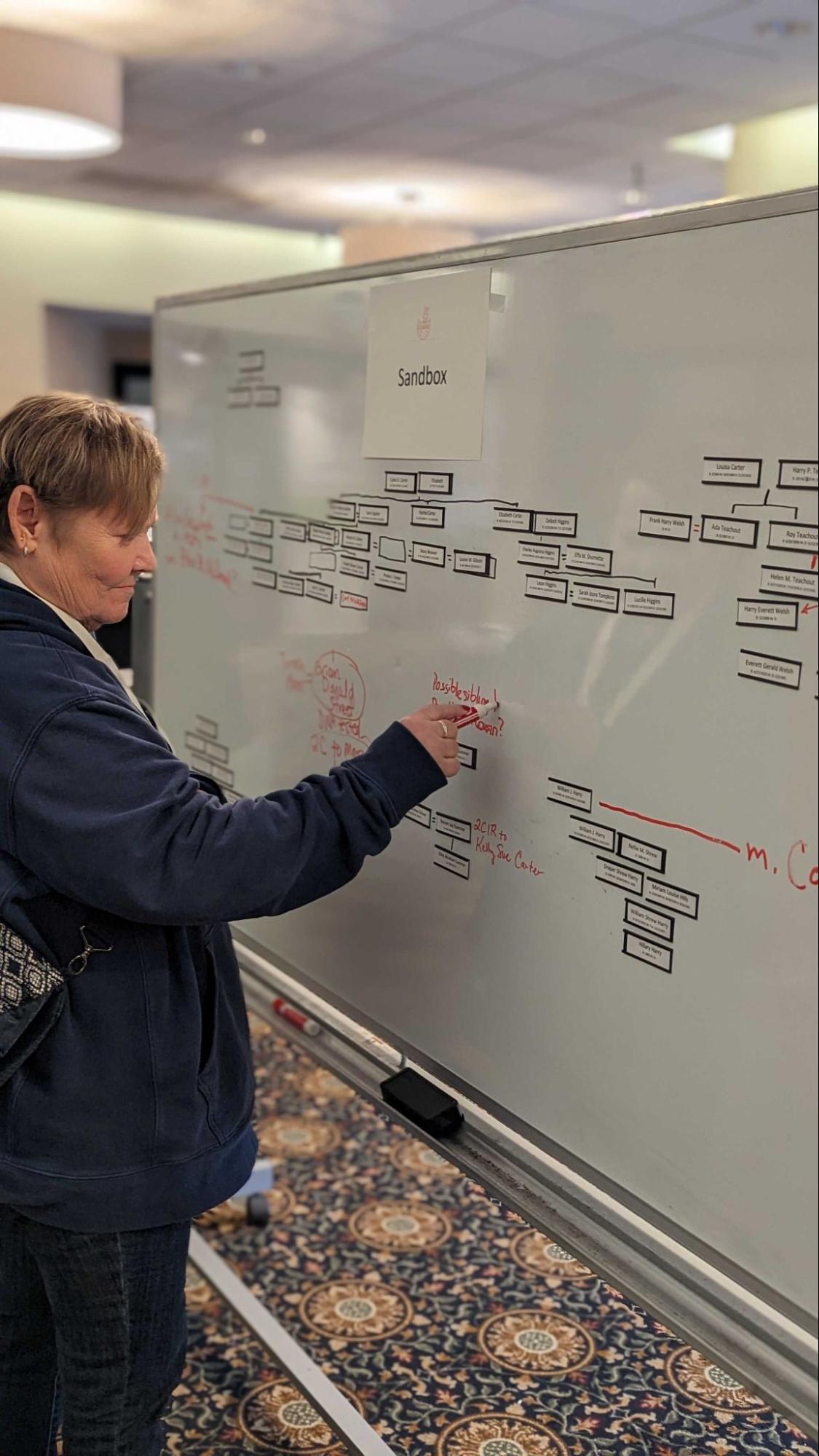
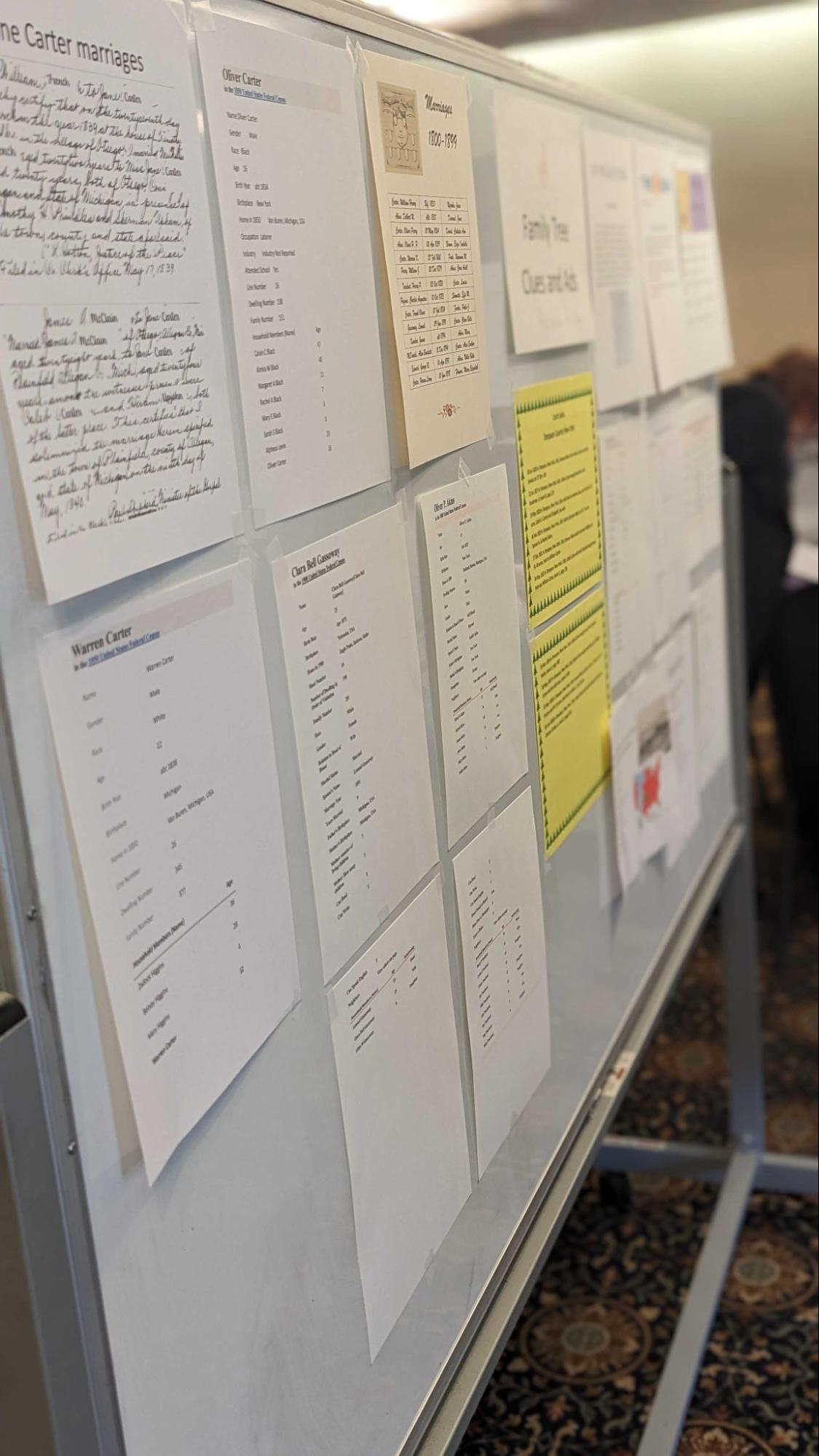
But that’s not the same as saying virtual gets the leftovers. If that’s the caliber of experience ECGGC builds for its in-person crowd, it’s worth wondering what they’ve got planned for attendees joining from home. Between vFairs’ setup and the built-in networking tools, virtual attendees aren’t just watching from the sidelines — they’re part of the conference too.
Either way, Mags’s advice is simple: don’t let the format decide for you. Sign up at ecggc.org and show up however works best for you.
Frequently Asked Questions About ECGGC
What’s the difference between a regular ECGGC session and DNA Academy?
Regular ECGGC sessions are topic-specific talks led by individual speakers. DNA Academy combines a live Q&A panel with expert presentations, built around a central theme, with audience questions helping shape the panel discussion in real time.
Do I need any prior DNA testing or genealogy experience to attend DNA Academy?
No. DNA Academy is designed to be approachable for all experience levels, whether you’ve never taken a DNA test or you’ve been researching for years.
What should I know or bring before attending?
Just curiosity. DNA Academy is built for anyone willing to learn, regardless of background or experience level.
Can I watch DNA Academy if I can’t attend live?
Yes. Sessions are available on-demand through vFairs, viewable through December 31, 2026.
How do I register or learn more?
Registration is available now at ecggc.org.
About Our Guest
Mags Gaulden
Genetic Genealogy Expert, Founder of Grandma’s Genes and mitoYDNA.org
Mags Gaulden is a great friend of FamilyTreeDNA. She presented ‘Jumping the Pond Using Y-DNA and Group Projects’ at RootsTech 2024 and a Y-DNA class on our behalf at RootsTech 2026, and has served as an on-site expert in the FamilyTreeDNA booth at both RootsTech 2024, 2025 and 2026, helping attendees interpret their results and explore testing options. She has also presented at the 15th Annual International Conference on Genetic Genealogy hosted by FamilyTreeDNA, helps moderate FamilyTreeDNA’s Facebook Groups, serves on the Group Project Administrator Council, and is currently a Project Administrator for ten Group Projects.
Based in Ottawa, Ontario, Mags is the founder of Grandma’s Genes, a genealogy consultation firm, and mitoYDNA.org, a free, open-access Y-DNA and mitochondrial DNA database operated as a 501(c)(3) nonprofit. She is also a leader at WikiTree, where she contributes to the DNA Integrators Project and has earned the Leader badge for her work on expanding DNA features across the site.
As a sought-after international speaker and workshop coordinator, Mags is known for her ability to make complex DNA concepts approachable, combining technical insight with humor and heart. She is a member of the Association of Professional Genealogists, the International Society of Genetic Genealogy, and several other organizations. Her passion and expertise have helped countless people make meaningful connections through genetic genealogy.
