By: Katy Rowe-Schurwanz
Explore the mtDNA Series
Start with the basics, then continue through the series to learn how mitochondrial DNA testing works, what your results mean, and how to use mtDNA in genealogy.
- How to Use mtDNA for Genealogy Research (current article)
- Tips and Resources for Using mtDNA Testing For Genealogy
Learn how to use mtDNA for genealogy research to trace maternal ancestry, confirm relationships, and overcome gaps in traditional records.
Tracing your maternal line can be one of the most challenging parts of genealogy research. Surnames change, records may be missing, and connections between generations are often difficult to confirm.
Mitochondrial DNA (mtDNA) offers a powerful way to overcome these challenges. Because mtDNA is passed down along the direct maternal line, it allows you to explore your maternal ancestry and connect with others who share that lineage—even when traditional records fall short.
In this guide, you’ll learn how to use mtDNA for genealogy, how to combine it with traditional research and other DNA tests, and how it can help you break through maternal-line brick walls.
How is mtDNA Used in Genealogy?
mtDNA is used in genealogy to trace direct maternal ancestry, confirm maternal-line relationships, and connect with others who share a common maternal ancestor.
It is most effective when combined with traditional research and other DNA tests.
mtDNA as Part of a Genealogy Toolkit
mtDNA is just one tool in a genealogist’s toolkit. Each type of research answers a different question, and understanding how they work together is key to building your family tree.
- mtDNA: What can I learn about my direct maternal line?
- Traditional genealogy: How are we related?
- Autosomal DNA: Who are my relatives?
- Y-DNA: What can I learn about my direct paternal line?
By combining these approaches, you can move from identifying potential connections to confirming exactly where those connections belong in your family tree.
Combining mtDNA With Traditional Genealogy Research
DNA testing is a powerful tool for genealogy, but it does not replace traditional research. Instead, it works best when combined with historical records, family trees, and documented evidence.
Mitochondrial DNA (mtDNA) helps guide your research by connecting you with others who share your direct maternal line. These connections can point you toward new records, locations, and potential relatives—but traditional genealogy is what confirms those relationships.
You can use mtDNA in your research in three key ways:
- Test multiple descendants to confirm your paper trail
- Use family trees to identify shared maternal ancestors
- Work with genealogical societies to access additional records
Test Multiple Descendants to Confirm Your Paper Trail
One of the most effective ways to use mtDNA is to test multiple individuals who descend from the same maternal ancestor.
If those individuals match each other at the expected level, it supports the accuracy of your documented lineage. If they do not match, it may indicate that something in the paper trail is incorrect or incomplete.
This approach is especially useful when working with older generations, where records may be limited or unclear.
Use Family Trees and Your Earliest Known Maternal Ancestor (EKA)
Your mtDNA matches can provide valuable clues through their family trees.
You may find your Earliest Known Maternal Ancestor listed in a match’s tree, or you may discover related individuals such as sisters, aunts, or other maternal-line descendants. Even when your ancestor is not immediately visible, shared locations and historical context can help you build out their tree and identify a common connection.
As you make new discoveries, be sure to update your Earliest Known Maternal Ancestor in your account. Keeping this information current improves matching accuracy and makes it easier for others to identify connections with you.
Work with Genealogical Societies and Local Resources
Local genealogical societies can be an invaluable resource when researching your maternal line.
These groups often have access to regional records, historical expertise, and ongoing research projects that may not be available online. They can also connect you with others who are researching the same families or locations.
This type of collaboration can be especially helpful when records are scarce or when you are working to break through a long-standing brick wall.
By combining mtDNA testing with traditional genealogy research, you can move beyond isolated matches and begin building well-supported maternal line connections.
Combining mtDNA with Autosomal DNA and Y-DNA
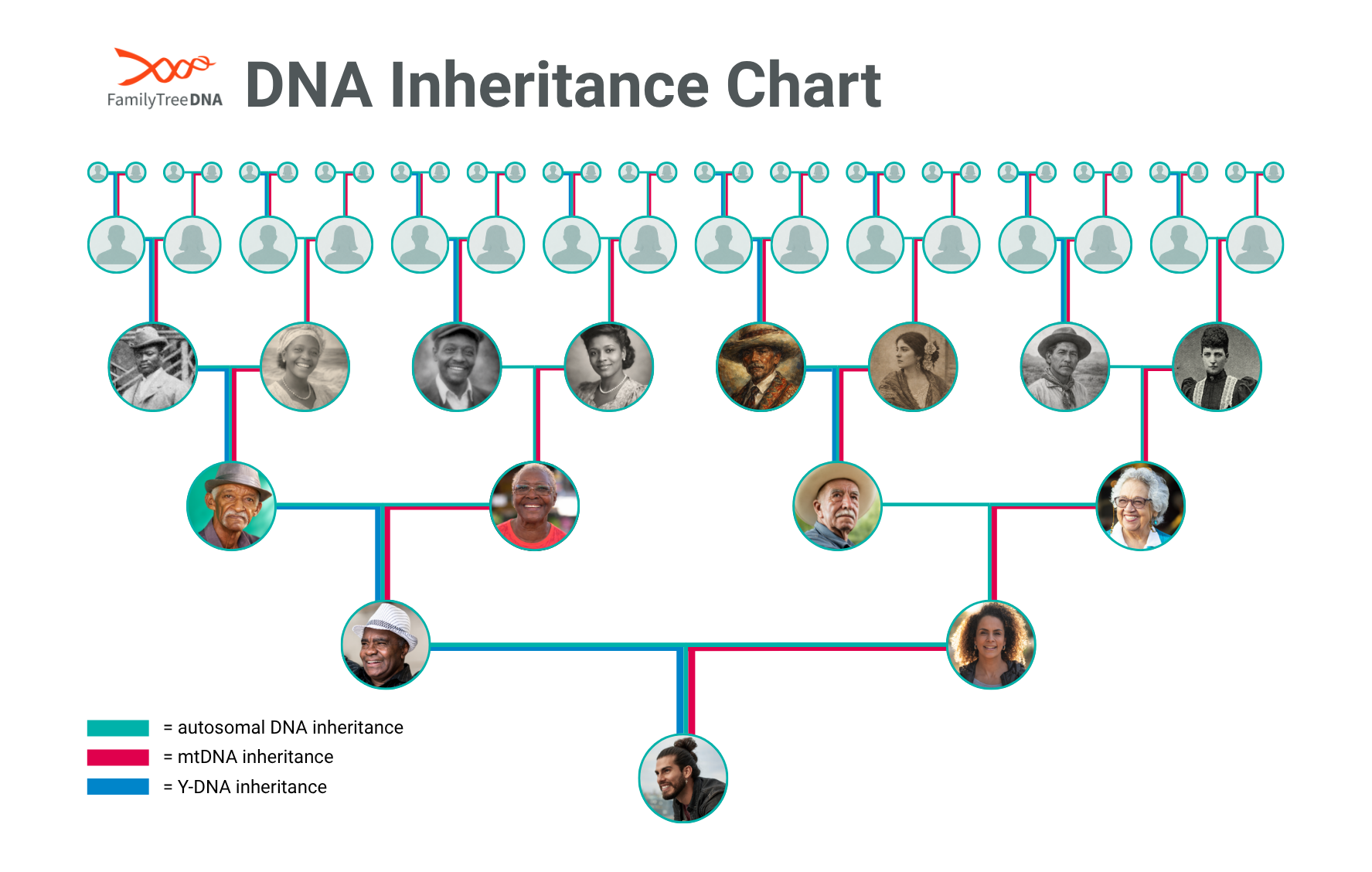
Mitochondrial DNA (mtDNA) provides insight into your direct maternal line, but it becomes even more powerful when used alongside autosomal DNA and Y-DNA testing. Each type of DNA follows a different inheritance path, and combining them allows you to study your family tree from multiple angles.
Using mtDNA and Y-DNA Together
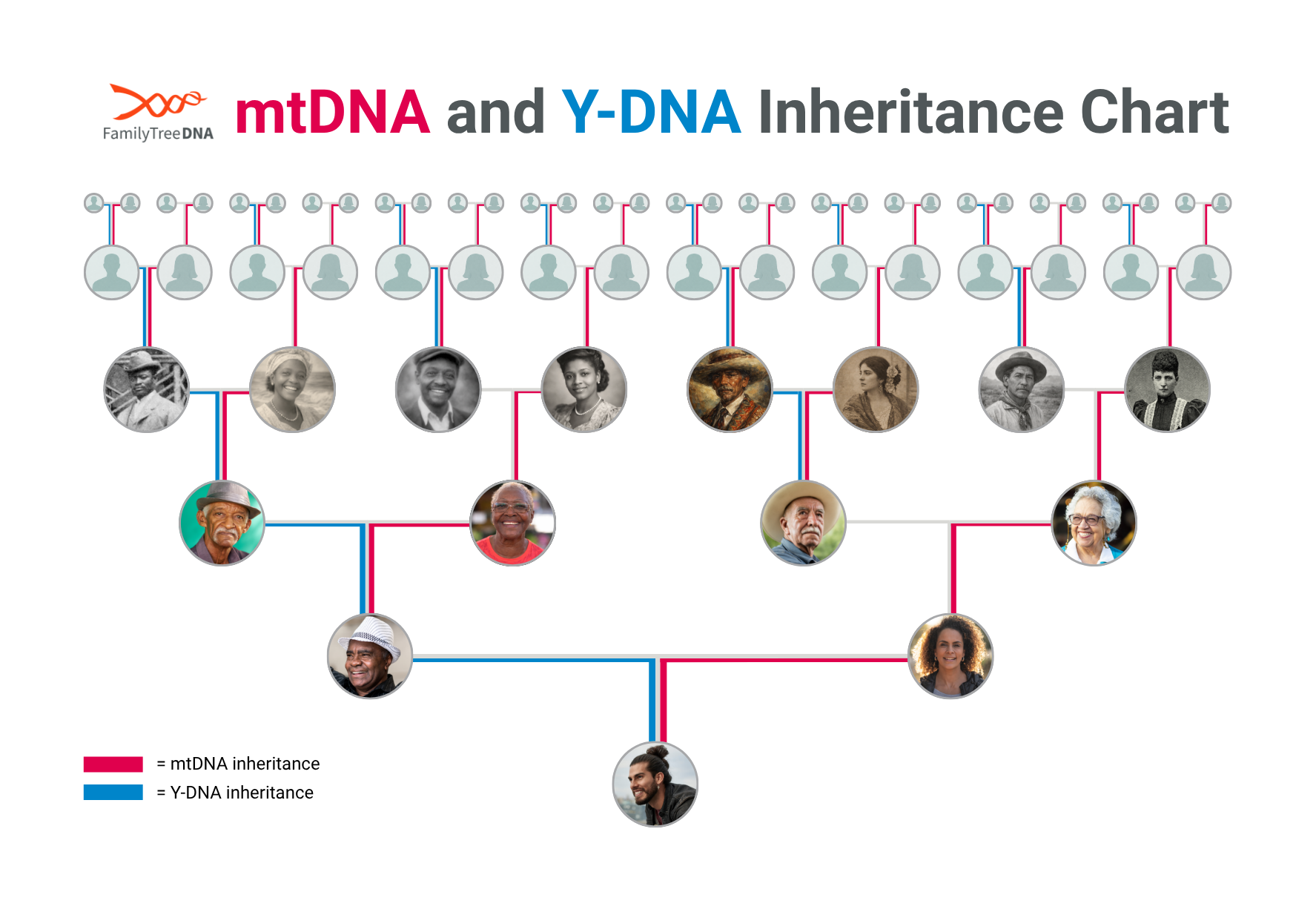
In most cases, your mtDNA and Y-DNA match lists will not overlap. This is because they follow completely different inheritance paths—Y-DNA is passed from father to son, while mtDNA is passed from mother to all children.
However, these tests can still complement each other when researching specific branches of your family tree.
For example, if you are trying to trace the maternal line of a paternal ancestor—such as your father’s father’s mother—you can use autosomal DNA or Y-DNA results to identify potential relatives connected to that line. From there, you can locate and test a direct maternal-line descendant to explore that lineage using mtDNA.
By combining these approaches, you can identify the right individuals to test and gain insight into ancestral lines that would otherwise be difficult to study.
Using Autosomal DNA to Support mtDNA Research
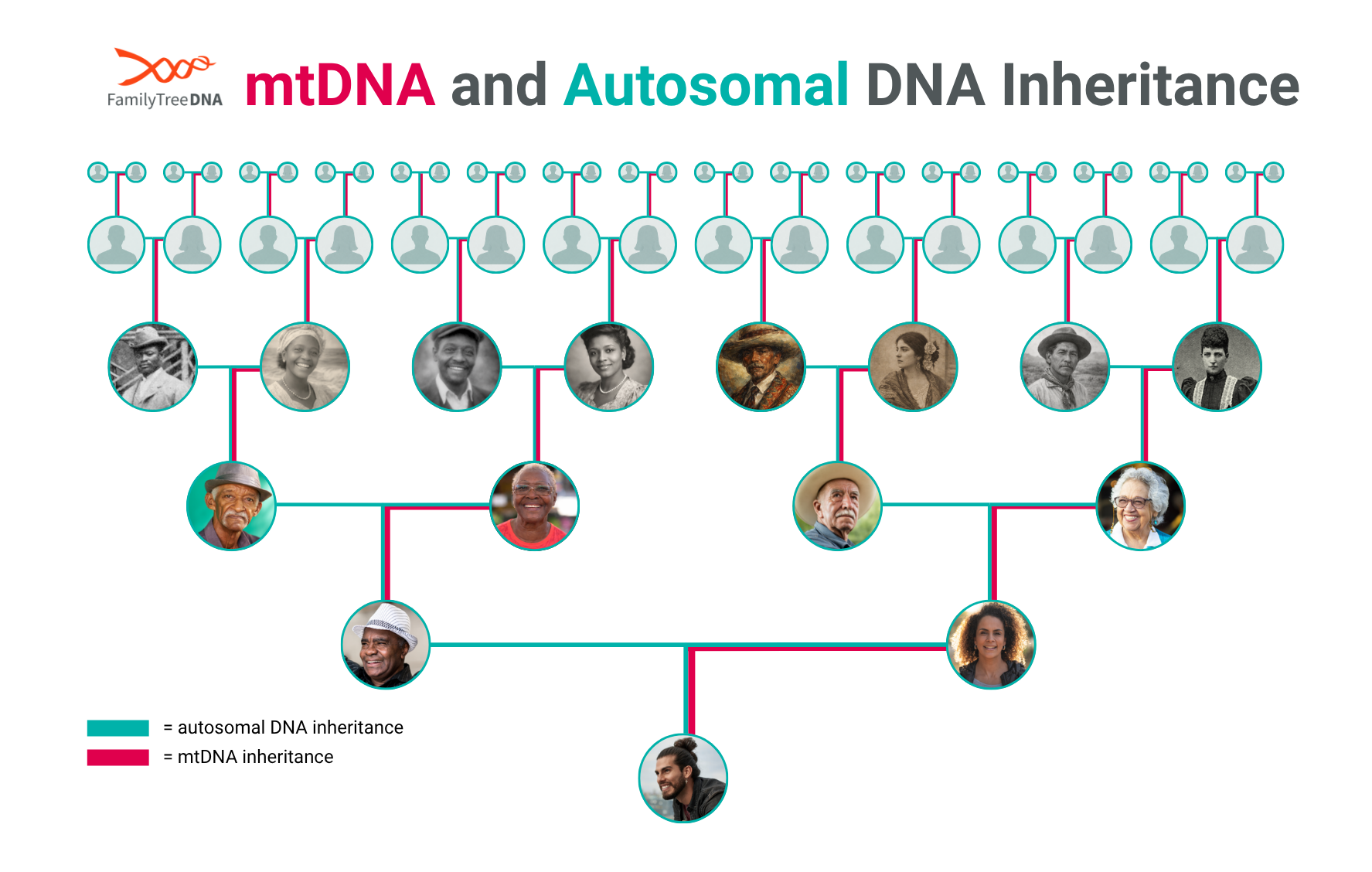
Autosomal DNA tests, such as Family Finder®, analyze DNA inherited from all ancestral lines and are most effective for identifying relatives within the past few generations.
Because autosomal DNA is inherited through random recombination, you may not receive detectable DNA from every ancestor—especially those further back in your family tree. This means some maternal ancestors may not appear clearly in your autosomal results.
mtDNA, however, does not recombine and remains relatively unchanged as it is passed down the maternal line. This makes it especially useful for studying deeper maternal ancestry and confirming direct maternal relationships that autosomal DNA alone cannot resolve.
By using autosomal DNA to identify relatives and mtDNA to confirm maternal-line connections, you can build a more complete and accurate picture of your family history.
Using Advanced Matches to Find Overlapping Connections
If you have taken multiple DNA tests, you can use the Advanced Matches tool to identify individuals who match you across different types of DNA.
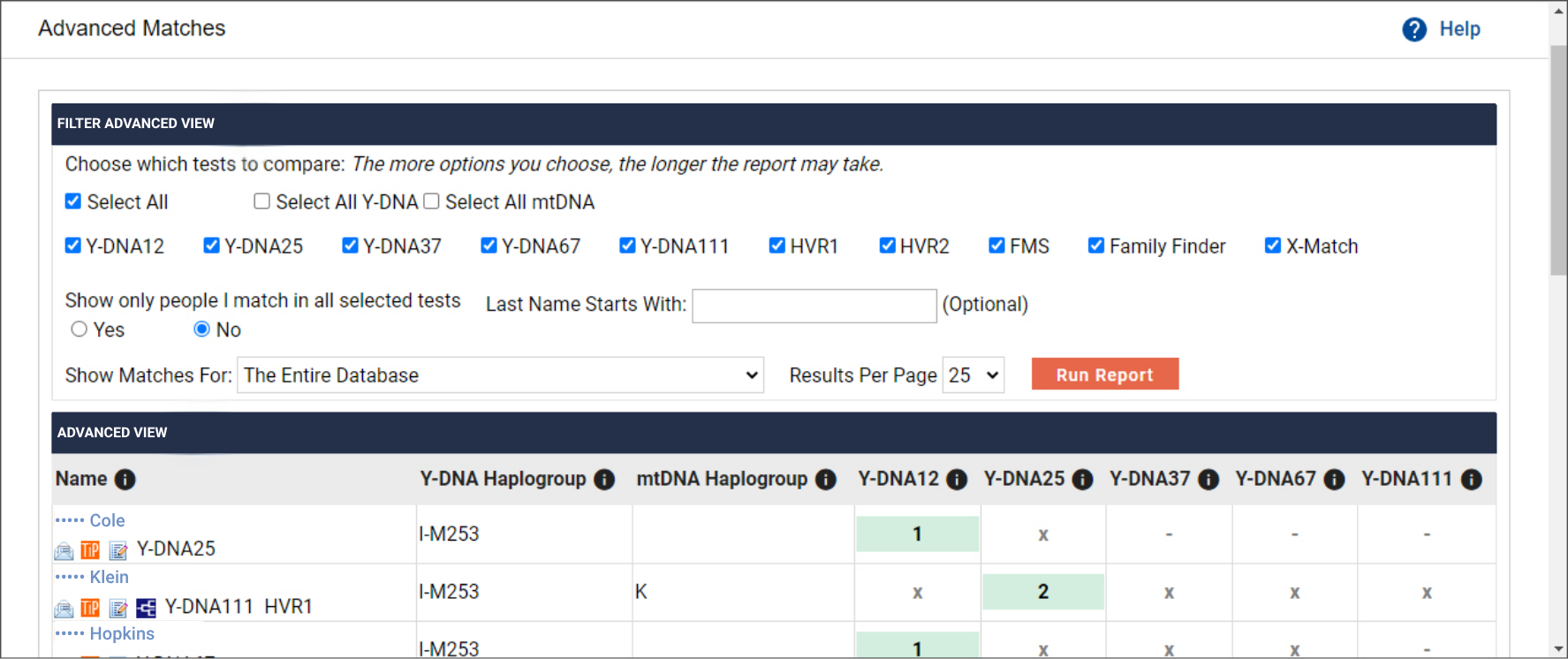
Advanced Matches allows you to compare results across mtDNA, autosomal DNA (Family Finder), and Y-DNA, helping you find connections that may not be obvious when looking at each test separately.
For mtDNA, you can filter matches by testing level and compare results across three key categories:
- HVR1: Matches based on the first hypervariable region
- HVR2: Matches based on both HVR1 and HVR2
- FMS (Full Mitochondrial Sequence or mtFull Sequence): Matches across HVR1, HVR2, and the coding region
These levels reflect both how much of the mitochondrial genome was tested and how closely you match another individual.
In your results, you will also see:
- mtDNA Haplogroup: Your match’s haplogroup based on their test results
- Genetic Distance (GD): A measure of how closely you match, where a value of 0 indicates an exact match
Lower genetic distance values generally indicate a more recent shared maternal ancestor, while higher values suggest a more distant connection.
You can also search for individuals who match you across multiple test types, such as both mtDNA and autosomal DNA. These overlapping matches may point to a shared ancestor in a more recent generation.
However, because autosomal DNA reflects all ancestral lines, a match across multiple tests does not automatically confirm a connection on your direct maternal line. Additional research is needed to determine how you are related.
Exploring mtDNA Group Projects and How They Aid Research
FamilyTreeDNA Group Projects are collaborative research groups led by volunteer Group Project Administrators and supported by participants who share a common research goal.
These Group Projects bring together individuals with similar maternal lines, haplogroups, or geographic origins, creating a shared space to compare results, exchange knowledge, and advance research. They are a valuable resource for interpreting your mtDNA results, connecting with others, and breaking through genealogical brick walls.
There are several types of mtDNA Group Projects, each with a different research focus:
- mtDNA Lineage Group Projects focus on specific direct maternal lines
- mtDNA Haplogroup Group Projects explore shared haplogroups and deep ancestry
- mtDNA Geographical Group Projects study the genetic makeup of a specific region
- Dual Geographical Group Projects combine mtDNA, Y-DNA, and autosomal DNA for regional research
mtDNA Lineage Group Projects
mtDNA Lineage Group Projects focus on individuals who share—or are believed to share—the same direct maternal line.
Because mtDNA is passed from mother to child with little change, these Group Projects can help confirm whether participants descend from a common maternal ancestor, even when surnames have changed over generations.
These projects are especially useful for validating maternal-line research and identifying connections that may not be visible through records alone.
mtDNA Haplogroup Group Projects
Haplogroup projects bring together individuals who belong to the same mtDNA haplogroup or subclade.
These Group Projects study the origins, mutations, and migration patterns of specific maternal lineages over time. By comparing results within a haplogroup, participants can gain a deeper understanding of their maternal ancestry and how their lineage fits into the broader human story.
mtDNA Geographical Group Projects
Geographical projects focus on the mtDNA profiles of a specific region, such as a village, county, or country.
These Group Projects aim to represent the genetic makeup of a population by collecting and analyzing results from individuals with roots in that area. This can help you understand how your maternal lineage fits within a regional context and identify others with shared geographic ancestry.
Dual Geographical Group Projects
Dual Geographical Group Projects combine Y-DNA, mtDNA, and often autosomal DNA (Family Finder) to provide a more complete picture of a region’s genetic history.
By analyzing both maternal and paternal lineages within a specific location, these Group Projects offer a broader perspective on how populations developed and migrated over time.
Frequently Asked Questions About mtDNA Test Results
What does mtDNA tell you about your ancestry?
mtDNA reveals information about your direct maternal line, including your maternal haplogroup and deep ancestral origins. It can also connect you with others who share a common maternal ancestor.
Can mtDNA be used to find relatives?
Yes, mtDNA can connect you with individuals who share your direct maternal line. However, because mtDNA changes very slowly, these connections may be distant and require additional research to confirm relationships.
How is mtDNA used in genealogy research?
mtDNA is used to trace maternal lineage, confirm maternal-line relationships, and break through genealogical brick walls. It is most effective when combined with traditional records and other DNA tests.
What are the limitations of mtDNA for genealogy?
mtDNA only traces a single maternal line and does not provide information about most of your family tree. It also cannot usually determine exact recent relationships without supporting evidence.
How far back can mtDNA trace your maternal line?
mtDNA can trace your maternal ancestry back hundreds to thousands of years, depending on your haplogroup. However, identifying specific recent ancestors requires combining mtDNA results with genealogical research.
mtDNA provides a unique window into your direct maternal ancestry, but its true value comes from how you use it. By combining mtDNA results with traditional research, autosomal DNA, and Y-DNA testing, you can uncover connections that would otherwise remain hidden.
As you continue your journey, the next step is learning how to apply practical strategies to your results. In the next part of this series, we’ll explore tips for using mtDNA more effectively in your genealogy research.
