Through decades of research and DNA testing, Janine Cloud uncovers the stories, surprises, and science behind her family tree.
Genetic genealogy isn’t just about science—it’s about stories. We sat down with Janine Cloud, Group Projects Manager and Event Coordinator for FamilyTreeDNA, to learn how DNA has shaped her family tree and what advice she has for others exploring their roots.
How DNA Shaped My Family Tree
With a foundation in traditional genealogy, Janine turned to DNA testing to push past brick walls and better understand her ancestral lines.
What does your own family tree look like?
Definitely a nut tree of some kind. I usually say pecan, since they’re native to Texas. I was fortunate to have aunts on both sides who did hardcore, old-school genealogy. They shared a lot of their work with me, so I got a head start.
Oddly enough, I have brick walls on my direct paternal and direct maternal lines at the second-great-grandparent level. I know my Cloud line came from England, I just can’t make that jump yet.
Some of the other lines I have back quite a few generations with either tentative or confirmed connections in Scotland, Ireland, and Wales. And of course, my Cherokee lines are a challenge after a certain point.
How did DNA testing influence the way you built or expanded it?
DNA testing, specifically Big Y, kept me from continuing to bump up against a brick wall that would never have fallen. My elusive three-times-great-grandfather, Isaac Cloud, descended from a collateral branch to the one I thought he did. William Cloud (1621, Wiltshire, England), the most well-known Cloud immigrant, shares an ancestor with Isaac’s line around 1500 CE.
Family Tree Discoveries and Surprising DNA Results
Some of Janine’s most memorable discoveries came not from records, but from unexpected DNA matches.
What’s the biggest surprise DNA revealed about your family tree?
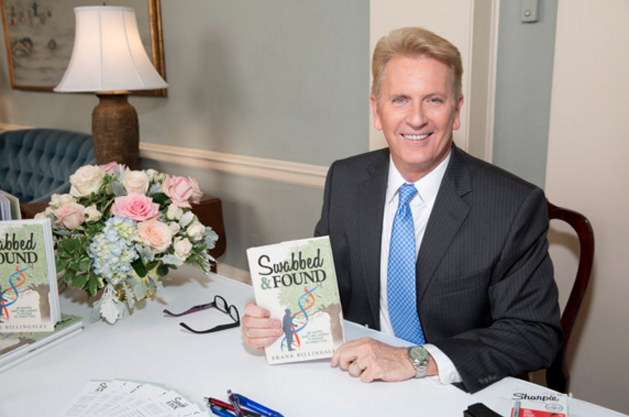
About twelve years ago, Houston TV personality and adoptee Frank Billingsley—our local NBC chief meteorologist—started searching for his biological parents. He tested with us because we’d already tested several other on-air personalities. We began with Y-37 and Family Finder™.
When his Y-DNA results came back, the surname Hensley/Henslee dominated the matches. I joked with a coworker that we might be related because I have Henleys in my tree. Then his Family Finder results arrived… and he showed up as a match! We share fourth great-grandparents Benjamin Hensley (born 1776 in Henry County, Virginia) and his wife Elizabeth Bruce, which makes us fifth cousins.
The most fun part? I’d been watching his weathercasts for years. I started following him in 2005 during Hurricane Rita, when he was the only local meteorologist who correctly projected the storm heading toward the Sabine River instead of the central Texas coast. I trusted his expertise long before finding out we were actually kin. Now his Big Y represents that paternal line for me.
And he’s not the only surprise. My good friend Roberta Estes and I have stumbled onto two different family connections completely by accident. The most recent one came from a casual comment she made about her Harrison ancestors. I mentioned that I also had Harrisons but hadn’t dug into them in years. A quick look showed that they came from the same family and location. Yet another unexpected branch tying us together.
Who is the most interesting ancestor you’ve uncovered in your family tree?
That’s a good question. I have some real characters in my tree.
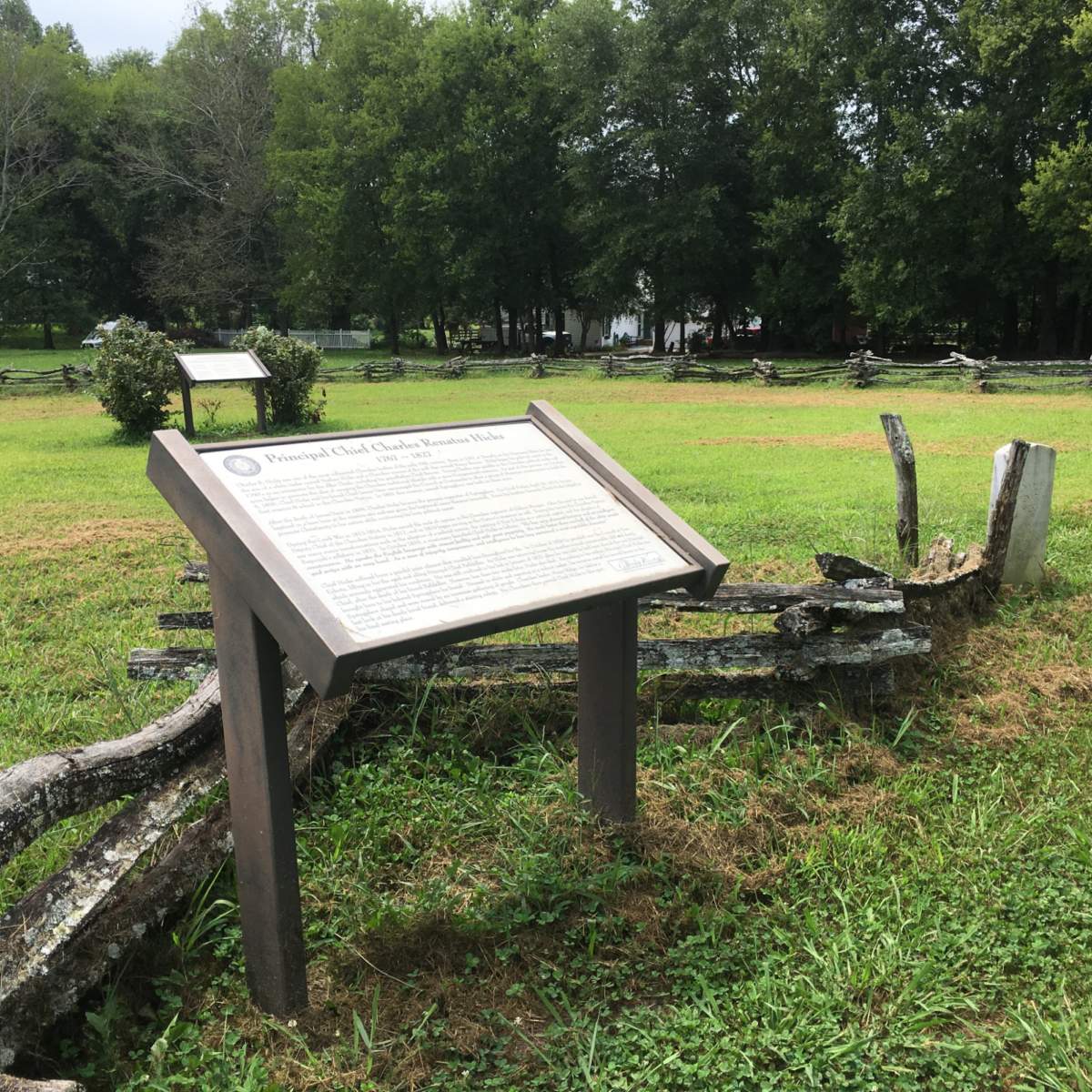
In terms of historically significant ancestors, my fourth-great-grandfather Charles “Renatus” Hicks (1767–1827) ranks pretty high. He served as Second Principal Chief of the Cherokee Nation under Chief Pathkiller from 1817 until 1827. Because Pathkiller was elderly and didn’t speak English, Hicks handled most of the Nation’s external affairs during that decade—effectively acting as the de facto head of government during a pivotal (and often controversial) period in Cherokee history. When Pathkiller died in January 1827, Hicks officially became Principal Chief, the first non-full-blood Cherokee to hold the position. Sadly, he served for only about two weeks before he passed away.
On a completely different note, my third-great-grandfather Jeremiah Horn (1794–1862) was “disowned” or “withdrawn from fellowship” by the Quakers in North Carolina for marrying outside the faith. So he became a Methodist circuit preacher and headed west. As you do.
Jeremiah’s personal life reads like a historical mystery novel: he first married a white woman whose identity researchers still haven’t been able to pin down and had two children with her. How that marriage ended—or whether it did—is unclear. He later married Elsie (or Ailsey), a daughter of Charles Hicks (yes, the one I just mentioned) and a Cherokee woman named Nancy Broom. After Elsie died in 1834, he married another Cherokee woman, Cynthia Dougherty.
Eventually, they all made their way to Texas, where Jeremiah bought a large parcel of land between Dallas and Fort Worth and helped found the town of Prosper. The land is still known today as the Jeremiah Horn Tract.
The irony? The Society of Friends—the same group that disowned him—had been involved in federal “civilizing” programs for Native peoples since 1819, and by 1869 they were administering many of the reservations on the Central and Southern Plains. Apparently it was very much a “help, but don’t get too directly involved” situation.
What’s the biggest surprise DNA revealed about your family tree?
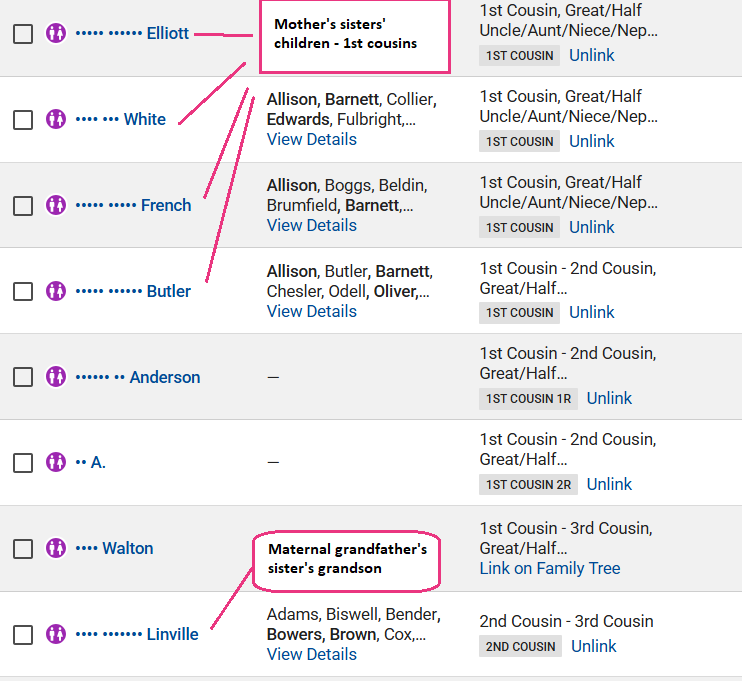
That my mother’s father’s mother and my father’s mother share a common maternal ancestor somewhere back in time.
When I got my uncle’s mtDNA results, I saw a familiar name in the matches—someone I recognized from Family Finder. I’d corresponded with the family researcher before and knew he was the grandson of my maternal grandfather’s sister, so a direct maternal descendant of my mother’s father. Seeing him pop up in my uncle’s mtDNA definitely got my attention.
I haven’t had the time to dig into exactly where that shared maternal ancestor sits, but it’s there somewhere. And the funniest part was what happened next: after that mtDNA match came through, all my maternal cousins who used to show up only under the Maternal filter in Family Finder suddenly switched to “Both.” It was a neat reminder that our trees weave together in ways we don’t always expect.
Was there a “brick wall” in your family tree that DNA helped you break through?
Not yet! I’m hopeful, though. The Cloud Big Y tests saved me more years of barking up the wrong branch of the tree. I could have spent the rest of my life trying to connect as a descendant of William Cloud and would never have been able to do it since my branch intersects above him!
Building a Strong Family Tree With DNA and Records
DNA is most powerful when paired with solid documentation. Janine explains how she balances genetic evidence with historical records.
How do you combine DNA evidence with historical records in your family tree?
If you mean actually displaying DNA on my tree, I don’t really do that right now. But if you mean how I use it, that’s where it gets fun. I use DNA results to spot connections that help me narrow down timelines. Once I have a good timeline, I know exactly which records to go after for that period.
In the Group Project world, the Group Time Tree is a lifesaver. It organizes results so it’s much clearer who connects to whom, and it lets us see whether a particular man could realistically descend from a given ancestral line.
For example, in the Cloud Group Project, we can easily see which of William Cloud’s five sons a tester descends from and then compare that with the paper trail. Sometimes the documentation is vague, and sometimes a pedigree is just… not quite right. DNA doesn’t care about social conventions—it doesn’t change names to match a husband’s surname or tidy up birth certificates. It simply tells the truth, and then we work from there.
I think most of us run into the same basic challenges when we’re trying to verify connections. My top ones—definitely not in any particular order—are:
Variant spellings. Is my 2x great-grandmother’s maiden name Jemeyson? Jameyson? Jimmerson? I still don’t know, and apparently neither does anyone else.
Too many people with the same names. You get multiple folks with the same first, last, and sometimes even middle names—often with siblings who also share names. Add in unknown parents or a father who shares the exact same name as the other candidates, and things get complicated fast.
Lack of accessible records. We’re in a golden age of digitization, but there are still so many records that aren’t online, aren’t indexed, or aren’t even findable unless you know exactly which archive holds them. And sometimes you don’t.
I recently learned, for example, that a lot of Cherokee and other Five Tribes records aren’t in state or federal archives at all—they’re tucked away in university collections. Which ones? How do you know where to look? I was incredibly fortunate to connect with people who knew where many of those records were for my paternal grandfather’s Cherokee lines. But that still leaves three grandparents’ worth of potential hidden treasures I haven’t even figured out how to chase down yet.
Which DNA tools do you find most helpful for mapping your family tree?
For mapping my family tree, I lean on a few core tools:
Autosomal DNA is my go-to for identifying cousin connections and spotting good candidates for additional testing. I use Advanced Matching and the Matrix a lot—they’re great for seeing how matches relate to each other and for confirming whether a cluster of people truly shares the same ancestral line.
Y-DNA is where the deeper structural work happens. Discover™’s Big Y tools are absolutely invaluable, though they do depend on finding (or already having) a direct paternal descendant who can test. The Match Time Tree, the Compare Tool, and the Group Time Tree have all been game-changers for sorting out which lines connect where and how far back.
mtDNA is still on my to-do list, so I don’t have enough hands-on experience yet to comment there—but it’s next in line.
Expert Advice for Building Your Family Tree With DNA
After years of helping others explore their ancestry, Janine shares the advice she wishes every DNA tester knew from the start.
What advice would you give someone just starting their family tree with DNA?
First, if you don’t really want to know, don’t test—and don’t ask family members to test. Once you see those results, you can’t unsee them, and sometimes cherished family stories don’t survive the weight of genetic reality.
Second, remember that you don’t know what you don’t know. You may think you know. You may have a beautifully documented paper trail going back generations. But until DNA weighs in, you can’t be certain whether that trail reflects the family story or the actual family tree.
I’ve worked with many customers over the years who were absolutely convinced they descended from a specific ancestor, only to discover they weren’t biologically related at all. Sometimes the discrepancy is recent—a parent or grandparent. Sometimes it’s several hundred years back. Either way, it can be jarring.
Third, be flexible. Don’t get too attached to your theories. Expect some of them to get upended, and try not to take it personally when they do. DNA doesn’t rewrite your history—it just gives you a clearer map to understand it.
And finally, understand that unexpected results can be unsettling—sometimes even life-changing. If those results involve someone else, be mindful and respectful of their feelings and their privacy. Not everyone processes surprises the same way, and compassion goes a long way in this field.
What common misconceptions about family trees and DNA testing would you clear up?
One misconception I see pretty often is the idea that DNA testing will hand you a ready-made pedigree chart with all your ancestors’ names filled in. I’ve seen people on social media genuinely expecting that—and it couldn’t be farther from how this works. Y-DNA can give you a solid genetic pedigree in terms of haplogroups and deep ancestry, but it won’t name specific great-grandfathers for you.
The truth is, you have to treat DNA like any other genealogical record or tool. It’s powerful, but it’s not magic. It takes work to integrate it into your research. And just like you can’t build a full family tree from a single census or one birth certificate, you usually need more than one tester in a line before the picture becomes clear enough to pinpoint relationships.
DNA is an incredible tool, but it works best when you pair it with solid paper research; the two together will take you much farther than either one on its own.
How do you make sure your family tree research stays reliable?
Use reliable sources—ideally as many first-hand ones as possible, and from as many angles as you can find. Paperwork is only as trustworthy as the person providing the information and the person writing it down. For example, on the 1930 census my paternal grandfather’s father is listed as being born in Oklahoma, but every other source shows he was born in Missouri. One wrong box checked, and suddenly your whole line can skid off course.

Then:
- Document.
- Compare to DNA results.
- Document again.
- Check the paper trail. Then check it again.
- Double-check the DNA.
- Phone a friend to sanity-check both the documentation and the DNA.
- Rinse and repeat.
And every time I come across a new piece of information or a new source, I run through that whole cycle again. Hypotheses get re-tagged, assumptions get challenged, and anything that doesn’t hold up gets revised.
I’m also not afraid to create theories—those are incredibly useful—but I don’t treat them like they’re precious. They’re working ideas meant to be tested, not protected. If the evidence contradicts them, they go straight back to the workbench.
I tag anything hypothetical and treat every clue with respectful skepticism. Don’t assume, don’t jump ahead, and—most importantly—don’t try to “connect the dot,” as Bennett Greenspan famously says. Let the evidence lead you where it leads, not where you hope it will go.
The Future of Family Trees and Genetic Genealogy
Janine reflects on how genetic genealogy has changed over the years—and where it may be headed next.
If you could go back, what advice would you give yourself when you started your family tree?
Make more notes and keep them organized. Truly—make lots of notes. And ignore most of those shaky leaves. For the love of Pete, do not merge someone else’s entire tree into yours just because it looks convenient in the moment.
Document everything. Everything. Where you found it, when you found it, what page, what website, what archive. Treat every source like you’re dropping GPS coordinates so future-you (or anyone else) can actually find their way back to it.
How do you see genetic genealogy changing the way people build family trees in the future?
I’m not entirely sure what the future holds, because in many ways that future is already here. People already use their DNA matches to confirm or refute connections and to figure out which ancestral line is actually the right one to follow. For more than twenty years, genetic genealogy has helped people connect to genetically relevant ancestors instead of relying solely on paper trails—which are only as accurate as the people who created them.
And honestly, look at how far the field has come in just 25 years. When my Allison cousins first mentioned taking a Y-DNA test back in 2000, I thought they had lost their minds—which is a pretty common reaction to pioneers in any new field. Yet here we are, with tools and databases that would’ve sounded like pie-in-the-sky dreams back then.
I also see technology shifting how we work. AI is still in its infancy as a reliable genealogical tool, but as more people learn how to use it properly—and as it gets better at understanding historical and cultural context—the possibilities are exciting. It could help broaden searches, highlight overlooked connections, and even help pinpoint ancestors more efficiently.
As testing databases grow and tools continue to improve, integrating DNA with traditional research will only get more routine, more precise, and a whole lot more powerful.
Closing Thoughts
Your family tree has more branches than you might realize. Start uncovering them with FamilyTreeDNA testing and see where DNA can take your story.
