By: Janine Cloud
Using an mtDNA haplogroup and a Group Project, researchers and the Royal Australian Navy identified an unknown WWII sailor after 80 years.
When Jeremy Austin, an evolutionary biologist and associate professor at the University of Adelaide, delivered a presentation to the genealogy group Genealogy SA one evening in September 2019, he had no idea what he had just set in motion.
He had been assisting the Australian Army and Navy for over a decade with the DNA identification of Australian war dead, and had mentioned that one of those unidentified servicemen carried mitochondrial DNA haplogroup J1c12a.
Mitochondrial DNA (mtDNA) is inherited only from mothers, making it a challenge to connect lineages, since records for women are much less common than those for paternal lines. Add to that the fact that surnames change every generation—sometimes more than once—tracing maternal lines can be difficult, even with DNA results to help make connections.
The next day, however, Austin received an email from one of the attendees with the news that someone with mtDNA haplogroup J1c12a had results shared on the public pages of the FamilyTreeDNA Dual Geographic Group Project, Australian Settlers.
Austin immediately emailed the founder and administrator of the Group Project, Gail Riddell, asking to be put in contact with that tester. Riddell, a native of New Zealand and a veteran of the Women’s Royal New Zealand Naval Service, gladly forwarded the message.
The reply came quickly. The kit manager, Greg Hockings, who was also a Group Project Administrator, shared that his father, Ian Hockings, had passed away, but had been a World War II combat veteran. Certain that his father, who served in the Royal Australian Air Force, would have wanted to help, he agreed to reach out to Austin.
That chance connection at the genealogy society ultimately led to the identification of the unknown serviceman Austin had mentioned in his talk.
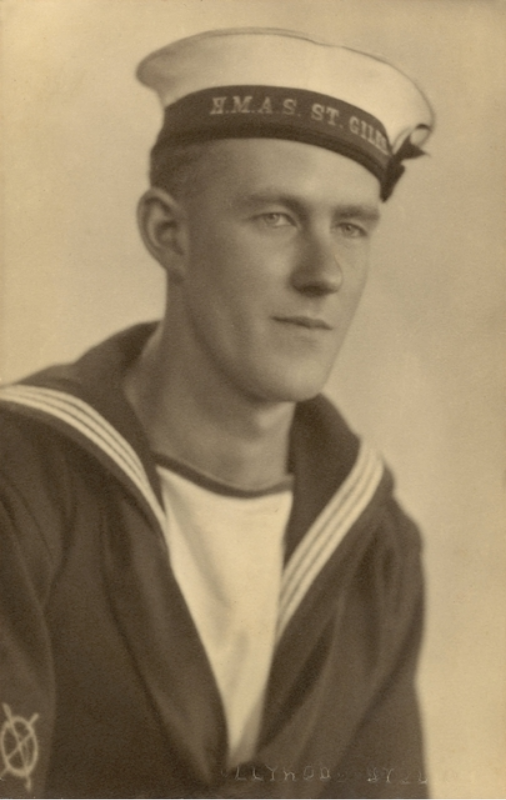
No longer was he the “Unknown HMAS SYDNEY (II) sailor.” He was Able Seaman Thomas Welsby Clark, 21, of Brisbane.
HMAS Sydney (II) and Its Legacy
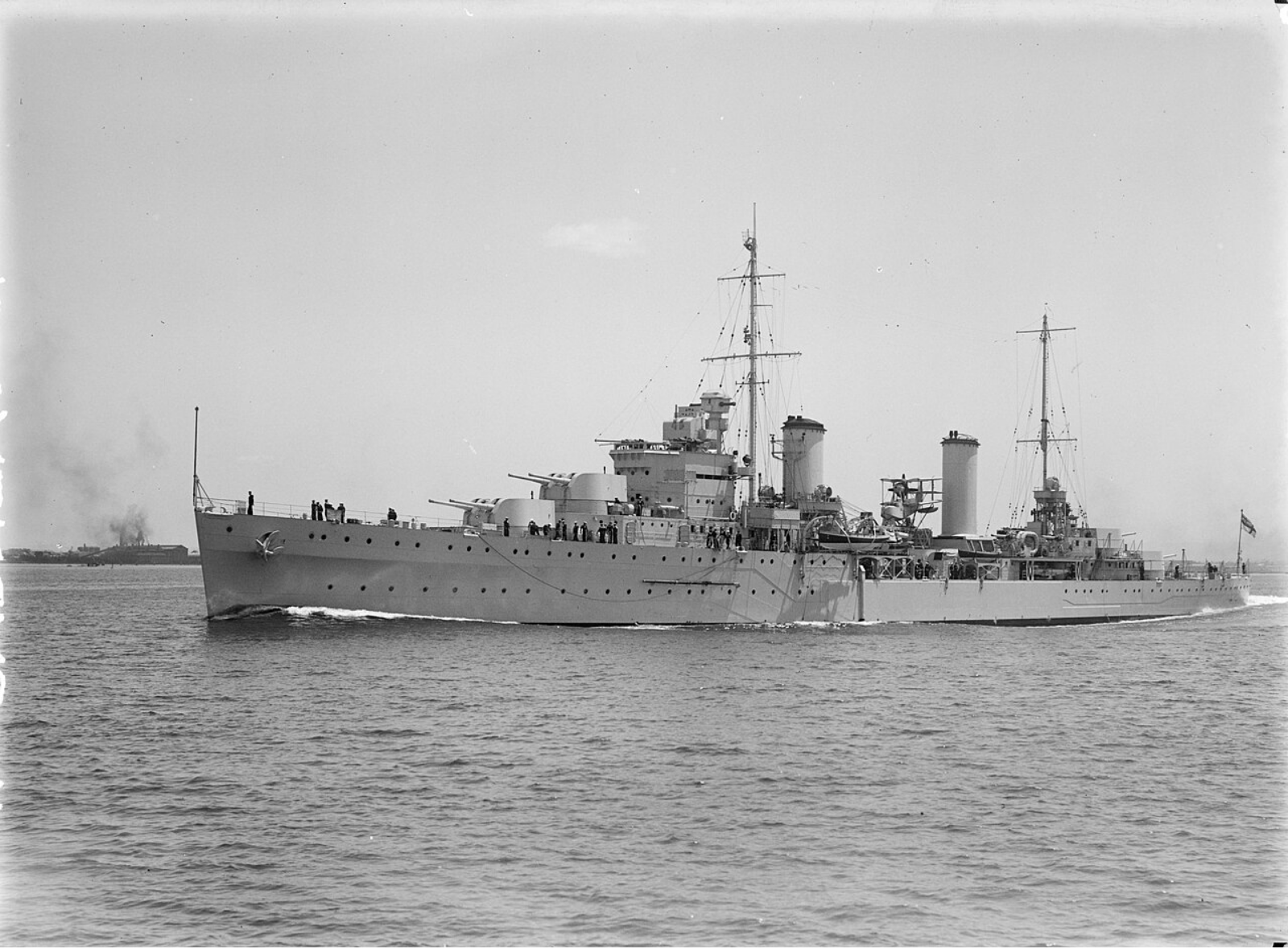
Those who aren’t World War II buffs may not recognize the ship’s name, but for Australians, the Sydney carries the weight of the greatest single loss of life in the history of the Royal Australian Navy.
HMAS Sydney (II) entered service with the Royal Australian Navy (RAN) in November 1935, the second to bear the name, continuing the naval tradition of reusing distinguished ship names. HMAS Sydney (I) served with distinction in World War I and survived the war before being decommissioned in 1928.
A light cruiser—similar in type to ships like HMS Belfast or USS Boise—the Sydney was built for speed and versatility, intended to outrun heavily armed battleships while carrying enough firepower to outgun smaller vessels like destroyers.
An Unlikely Enemy
But on 19 November 1941, in the Indian Ocean off Western Australia—only weeks before the bombing of Pearl Harbor that prompted the United States’ entry into the war—the Sydney met an unlikely opponent: the Kormoran, a German merchant raider operating in disguise thousands of miles from the European theater.
The battle-tested Australian ship received a distress call from what appeared to be a Dutch-registered merchant steamer. Lured closer while attempting to identify the vessel, the Sydney couldn’t escape once the Kormoran dropped its disguise. While there is some controversy about who fired first, a fierce, near point-blank battle ensued.
The German ship, responsible for sinking ten merchant vessels and capturing another, took heavy damage from the Sydney’s armaments. The crew scuttled it as they abandoned ship. Over the next ten days, 318 of the 399 aboard were rescued. The survivors were questioned and held as prisoners of war until their repatriation in 1947.
The Sydney sustained catastrophic damage and sank.
None of the 645 souls aboard survived.
No Sign, No Signal
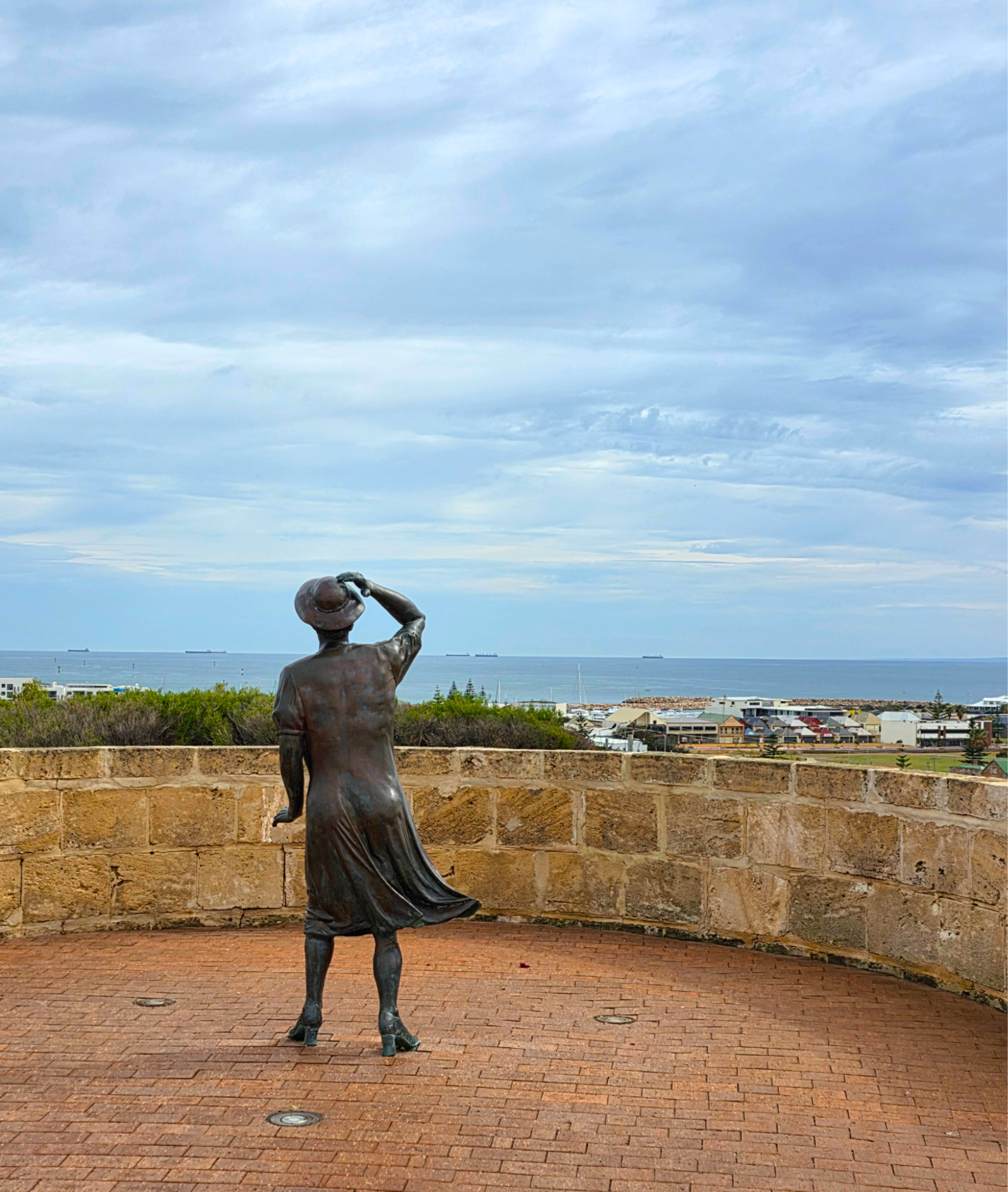
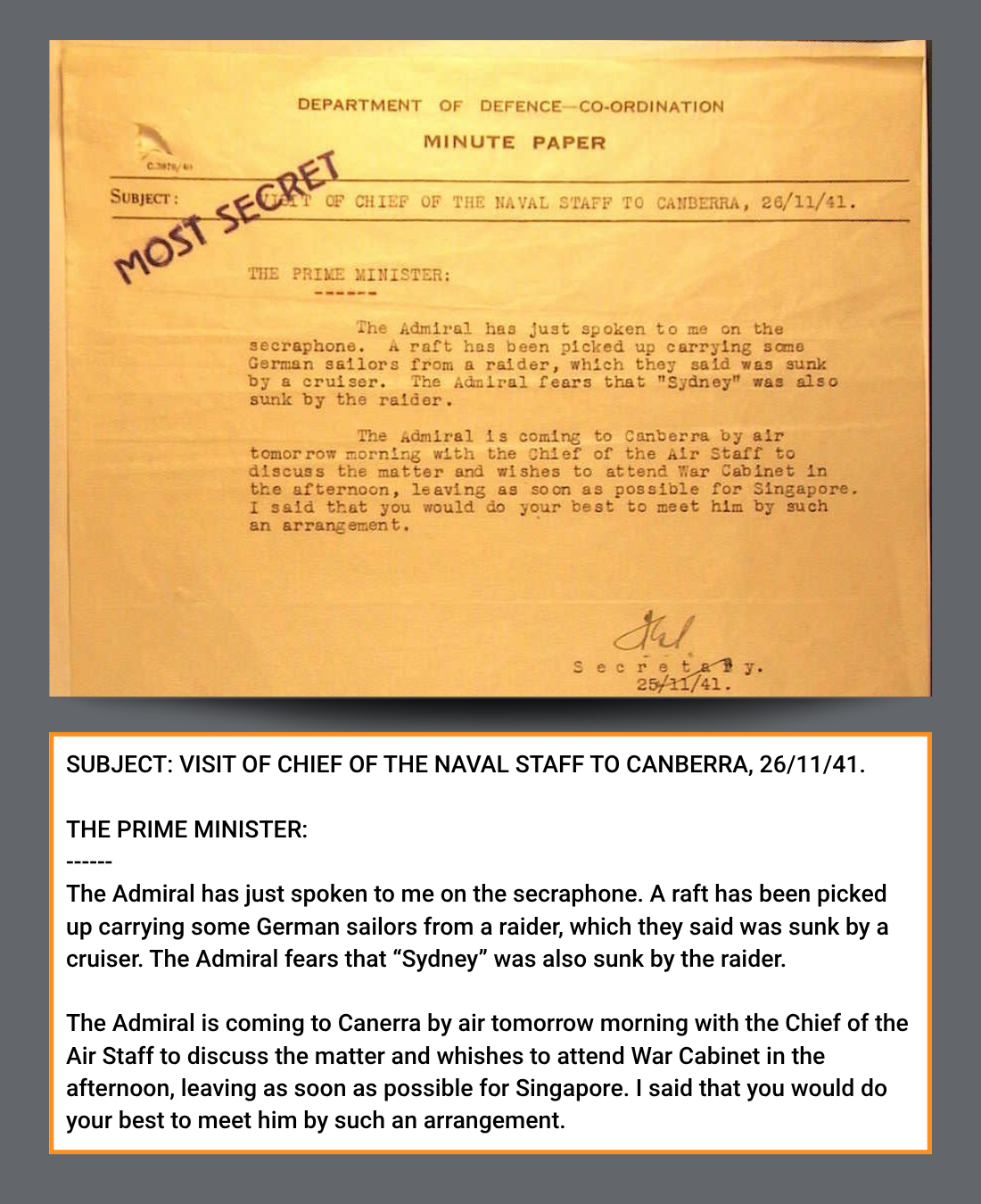
The ship was expected back in Fremantle on November 21 or 22, but delays of several days were not unusual, so no alarm was raised. By November 24, with no sign or signal, the Navy signaled Sydney to break radio silence; when there was no response, a search was initiated.
As survivors from the Kormoran were picked up, reporting their ship had been sunk, the RAN feared the worst: that the German raider had taken Sydney with it.
A search of the area yielded only a damaged life raft known as a Carley float (now held at the Australian War Memorial) and an empty life jacket with broken straps. The scope of the disaster became clear.
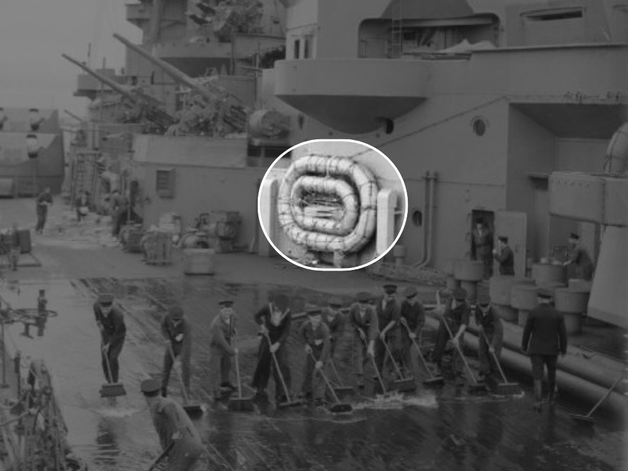
Survival in the open Indian Ocean without food or water would have been measured in days at most. Any crew who had made it off the rapidly sinking vessel had almost certainly perished before the search even began.
Much of what is known about the battle and the fate of Sydney comes from the interrogation of more than 300 German sailors who were rescued.
The Unknown Sailor
On December 1, newspapers from around the Commonwealth carried Prime Minister John Curtin’s confirmation that the ship and crew had been lost in the battle, expressing grief on behalf of the nation, as well as pride in the service of the men who were lost.
Then, on February 6, 1942, a Carley float was sighted off Christmas Island, about 1,800 kilometers north of Carnarvon, Western Australia, off the coast of Indonesia, approximately 500 km south of Jakarta.
While the Carley float had sustained damage, it carried the decomposing body of a uniformed sailor. In addition to a shrapnel wound to the head, the seaman showed clear signs of prolonged exposure to the elements.
The body was examined and an investigation launched, but details are limited, as evacuations were underway in anticipation of an imminent Japanese attack.
The unidentified seaman’s remains were buried with military honors in an unmarked grave on the island.
On March 31st the Japanese invaded, controlling the British territory until the war ended in September 1945.
The Long Search for a Name
After the war, the RAN continued the inquiry into the identity of the body on the Carley float. But the circumstances surrounding the discovery worked against that effort. In the chaos of evacuation and subsequent occupation, records were incomplete or missing, and later reconstructed from memory. Early conclusions cast doubt on whether the sailor had even come from the Sydney.
The inquiry resurfaced at intervals over the following decades, only to stall again, and for long stretches the trail went cold.
In 2001, the RAN made an unsuccessful attempt to locate the hastily buried remains in the European cemetery on Christmas Island. They didn’t give up, though, despite controversy about the origins of the body and whether pursuing the identification was necessary.
In 2005, a second dig located what were thought to be the remains of the unknown sailor, and in 2006, the body was exhumed for examination. He was subsequently buried with full naval honors in the Geraldton War Cemetery in Western Australia, chosen because it is the closest such cemetery to where Sydney was lost.
By the time the body was exhumed, science had advanced and could provide some rather specific details about the deceased. Bone isotope analysis revealed details such as approximate age and height. It also showed that he had lived in eastern Australia.
According to Commander Greg Swinden, Dr. Denise Donlon of the Shellshear Museum at the University of Sydney did the majority of the forensic DNA work for the RAN.
That analysis suggested he had red hair, blue eyes, and pale skin, and that he likely had Scottish or Irish ancestry.
To widen the search, a portion of the remains was transferred to Jeremy Austin at the University of Adelaide for additional analysis. That decision proved to be critical in ultimately identifying the sailor.
DNA testing revealed his mtDNA haplogroup as J1c12, but an mtDNA haplogroup, even an uncommon one, was not enough to identify him on its own. At the time of this publication, only 108 testers in the FamilyTreeDNA database are on that branch of the tree of maternal ancestry.
Still, that mtDNA haplogroup was the key.
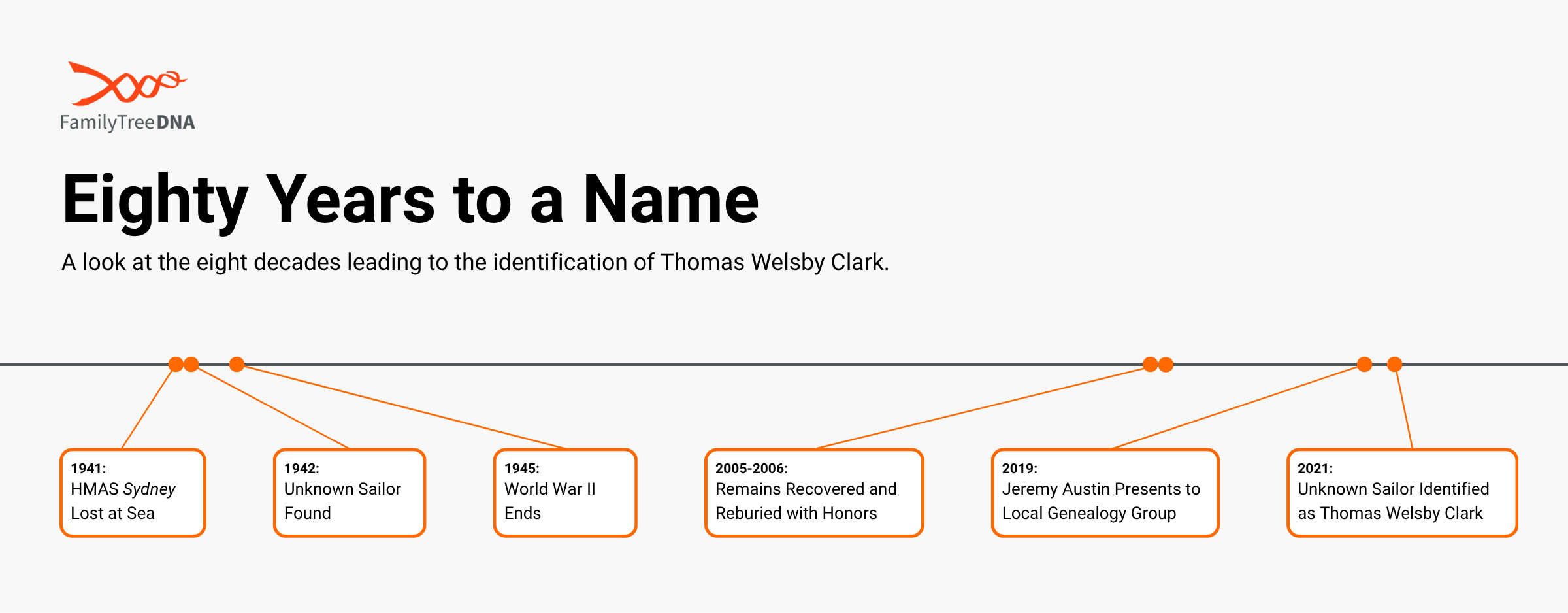
The effort by the University of Adelaide team stretched over a decade. From 2006 to 2021, more than 180 DNA samples were tested—each one a possibility, each one a step closer, and often, another dead end. Not until Austin’s talk led to the Australian Settlers project was a connection with a match made.
Once Group Project Administrator Riddell relayed that Hockings was willing to assist in the identification process, Hockings and Swinden painstakingly began tracing that maternal line while also working at their regular jobs.
Still, they persisted.
Then, Swinden discovered a branch of which Hockings was not aware, connecting the two lines back to Lilias Balderston(e), baptized in 1810.
In Falkirk, Stirling, Scotland — just as the forensic analysis had suggested.
Eighty Years to a Name
Lilias married John Waugh in 1829, and the Waugh family migrated to Melbourne with four children in 1854. Fortunately, three of those children were daughters, each of whom had daughters who also had daughters—and one was the mother of the sailor.
Living female descendants of those women provided DNA samples. Their mtDNA matched the unknown sailor’s, setting up the next stage of confirmation using Y-DNA from Colin Clark, a potential nephew.
Y-DNA passes from father to sons, tracing patrilineal ancestry. If Colin Clark’s Y-DNA matched the unknown sailor’s sample, it would confirm they shared a paternal ancestor, and was indeed his nephew.
It was a match.
The Unknown HMAS SYDNEY (II) sailor had a name: Thomas Welsby Clark.
That wasn’t the end of the story, though. Not yet.
To ensure there had been no errors or bias, the RAN ordered confirmation testing.
After the preliminary DNA identification, the Australian Federal Police lab in Canberra performed a second DNA test on a bone fragment. It was also a match for Colin Clark. Then, as a final validation, two separate laboratories independently performed the same tests on both the bone fragments and the Clark family DNA donor.
Again, they matched, confirming the result beyond doubt.
Finally.
After eighty years of uncertainty, the identity of the body in the Carley float was no longer in doubt.
The Royal Australian Navy had completed its mission.
Tom, as he was called, was born January 28, 1920, in New Farm, a suburb of Brisbane, Queensland, the third son of James Colin Clark and Marion Clark (née Welsby). He was educated at Slade School in Warwick and spent time working on family properties and oyster leases in Brisbane. A strong swimmer and keen yachtsman, he grew up with a natural connection to the water.
After leaving school, he worked as an accountant in Brisbane, but chose to enlist in the Militia in March 1939. In August 1940, he left the Army Reserve to join the Royal Australian Navy. He trained as a submarine detector operator and served in anti-submarine roles in Sydney before being promoted to acting able seaman in July 1941. The following month, he joined the crew of HMAS Sydney (II).
Just three months later, he and the rest of his shipmates were killed. His was the only body recovered.
Bringing Thomas Home
On the 80th anniversary of the sinking of the Sydney, a special ceremony was held at the Australian War Memorial, where Vice-Admiral Michael Noonan announced that Able Seaman Thomas Welsby Clark was finally home.
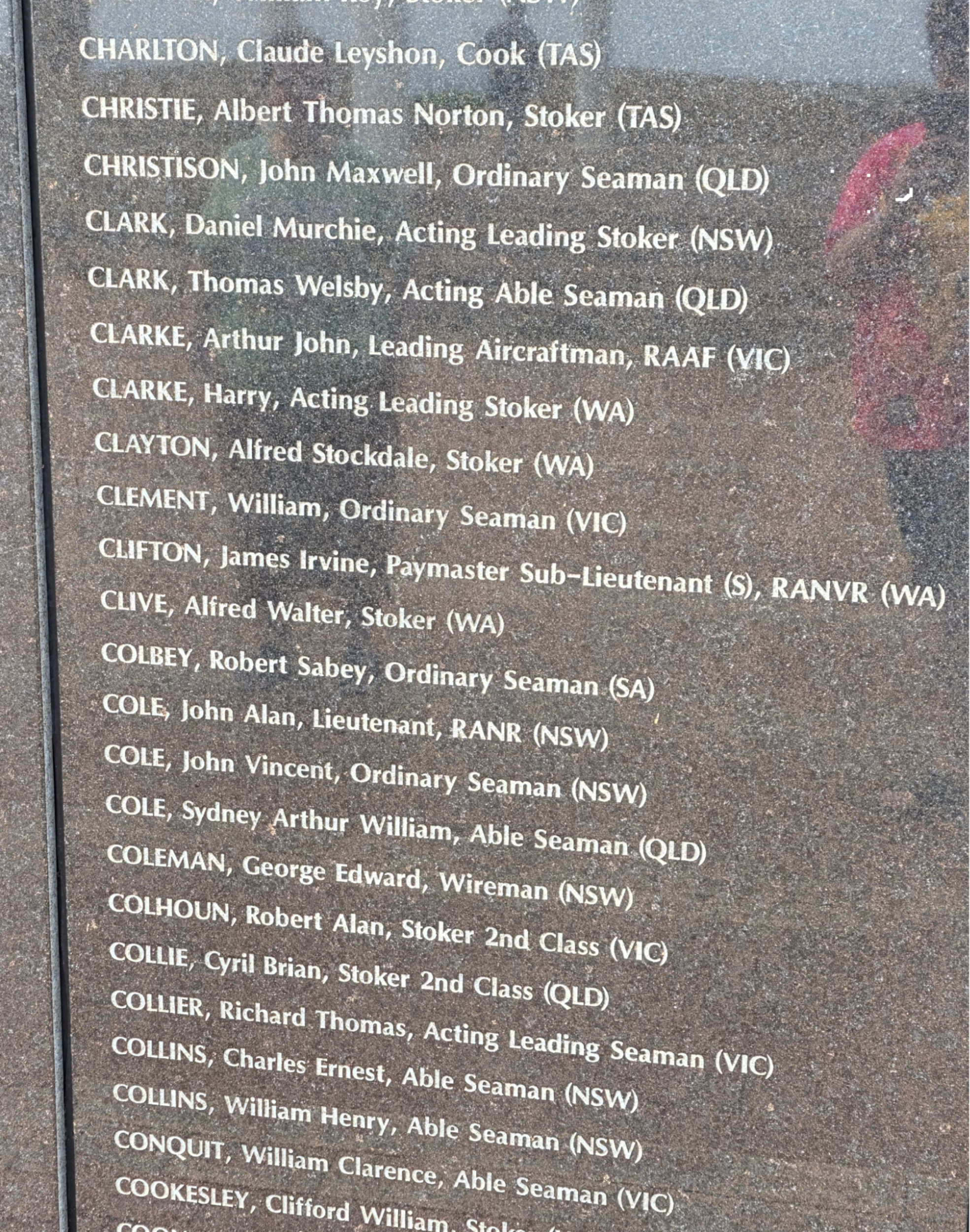
His nephew, Colin Clark, attended the ceremony, as did Greg Hockings, whose father was the tester whose J1c12 mtDNA results helped make the identification possible.
By the time Clark was identified, no one who had known him personally was still alive, though a niece, Dr. Leigh Lehane, told ABC News (Australian Broadcasting Corporation) that her uncle had held her as an infant just prior to joining the Sydney.
“The truth is the main thing, and I’m so very grateful for the many, many people—well over 100—who helped ascertain the truth of his identity,” she said, noting the relatives who provided DNA, the forensic pathologists who examined the remains, the geneticists, and her half-brother Colin, whose DNA helped clinch the result. “I’m so grateful to all of them and glad the truth was found out.”
“I don’t think anyone else is alive now who knew Tom.”
The wreck of the Sydney was located in 2008, five days after the Kormoran was found just a few miles away, but no other remains have been located. Families of the others aboard the Sydney held out hope for years. Many never fully recovered from the loss; for them, the identification of Clark was bittersweet, and he came to represent those who did not make it home.
Had the Royal Australian Navy not remained committed to uncovering the identity of the “Unknown HMAS SYDNEY (II) sailor,” Thomas Welsby Clark might still be counted among the missing.
Hockings later expanded on the story by explaining that, after being contacted by a Navy commander, he provided details on his family’s direct maternal line and worked with the Navy to expand it, including a branch of which he had been previously unaware. He also connected researchers with two of his father’s sisters, who consented to DNA testing.
Once the unknown sailor had been provisionally identified through mitochondrial DNA, additional relatives were located and tested, including Y-DNA, confirming the identification beyond doubt.
It took more than technology to make the connection that gave the Unknown Sailor back his name. Without the FamilyTreeDNA Australian Settlers project, an active Group Project Administrator, a receptive kit manager, and relatives willing to test, the identification would not have been possible.
In the end, the DNA he inherited from his ancestors told the story records could not—and it lives on in those who came after him, for his family and for those other families.