By: Katy Rowe-Schurwanz
Explore the Autosomal DNA Series
Start with the basics, then continue through the series to learn how autosomal DNA works, what your results mean, and how to use them in genealogy.
Discover what autosomal DNA is, how it is inherited, and how autosomal DNA testing helps identify relatives and explore your ancestry.
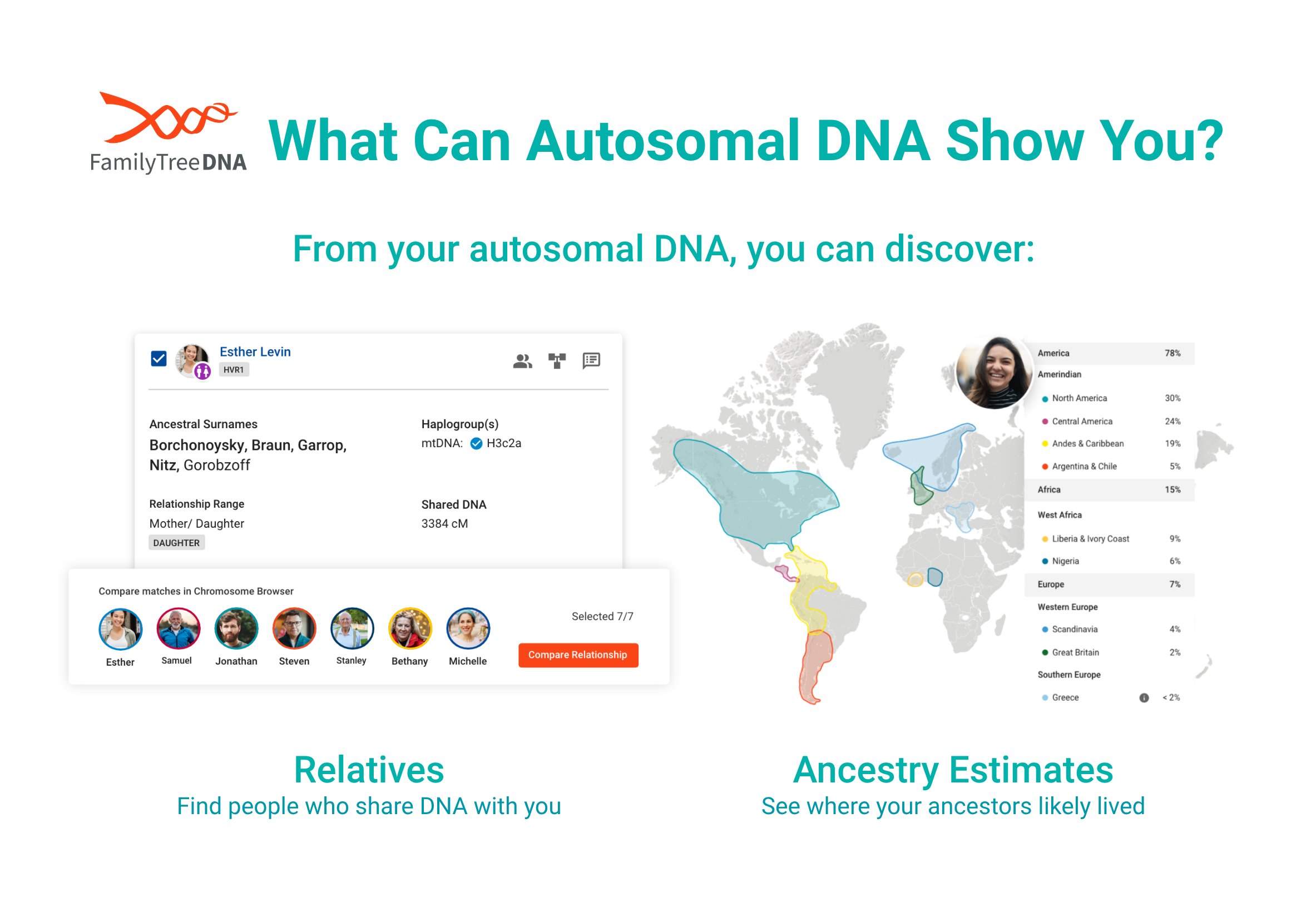
Autosomal DNA testing is the most common type of DNA test used in genealogy.
It helps you identify relatives across both sides of your family and estimate
where your ancestors lived in recent history.
In this guide, you’ll learn:
- what autosomal DNA is.
- how it is inherited.
- how it helps genealogical research.
What is Autosomal DNA?
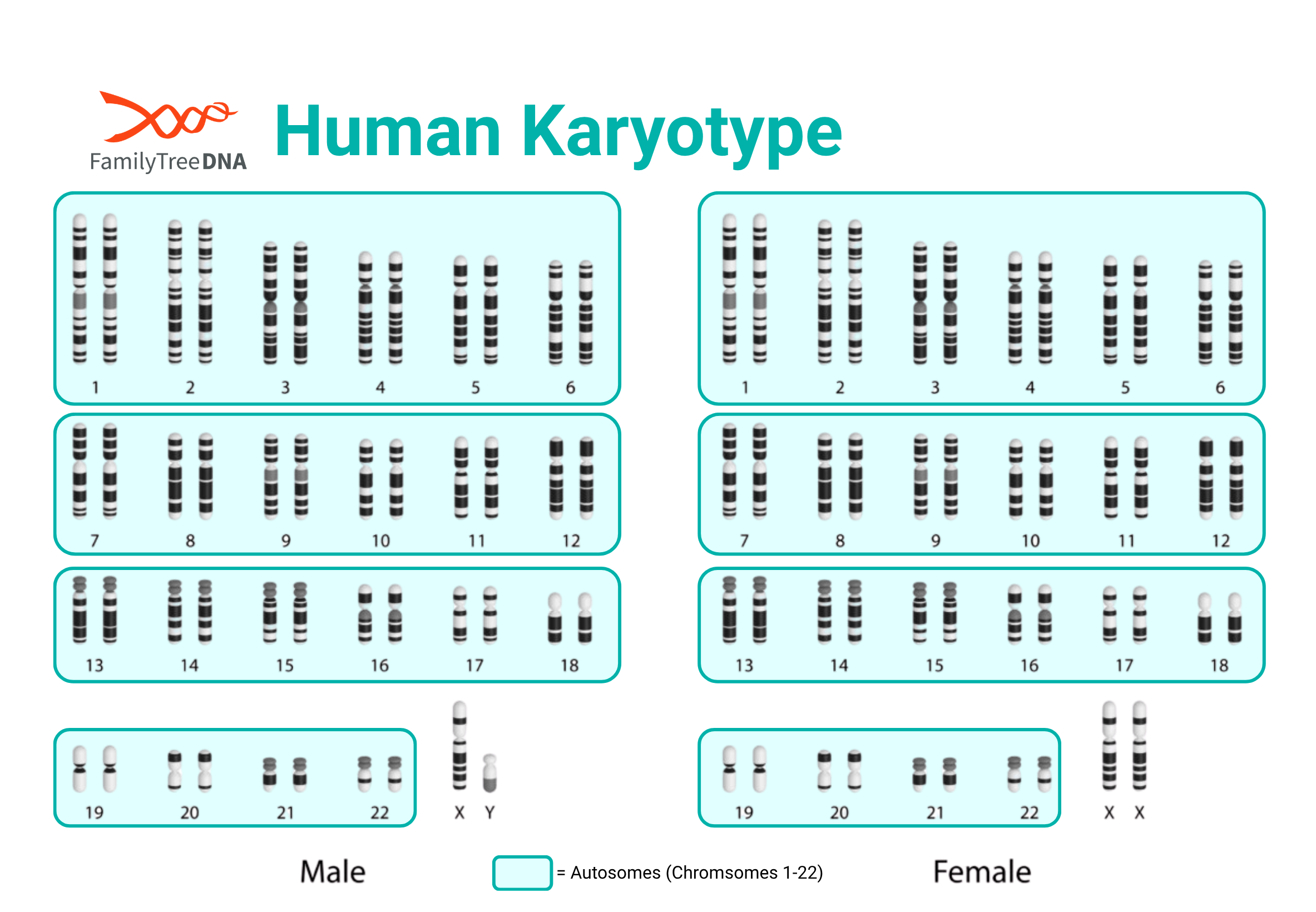
Autosomal DNA refers to the 22 pairs of autosomes (chromosomes 1-22) that you inherit from your parents. Most autosomal DNA tests also include the X chromosome. Everyone inherits half of their autosomal DNA from their father and half from mother.
How is Autosomal DNA Inherited?
Autosomal DNA is inherited from both your father and mother. They both carry DNA from their parents. Their parents carry DNA from their parents, and so on.
While you inherit 50% of your autosomal DNA from each parent, your full siblings will inherit a different combination of your parents’ DNA because of a process called random recombination.
You may carry more of your dad’s DNA on chromosome 1 and your sibling may carry more of your mom’s DNA on her chromosome 1. Both of you will end up with 50% of each parent’s DNA.
Random Recombination
Autosomes are found within the nucleus of the cell. Each parent will pass one of each of their autosomes to their children. During a process called meiosis, the two cells from each parent will make copies of each of their autosomes and randomly combine them together.
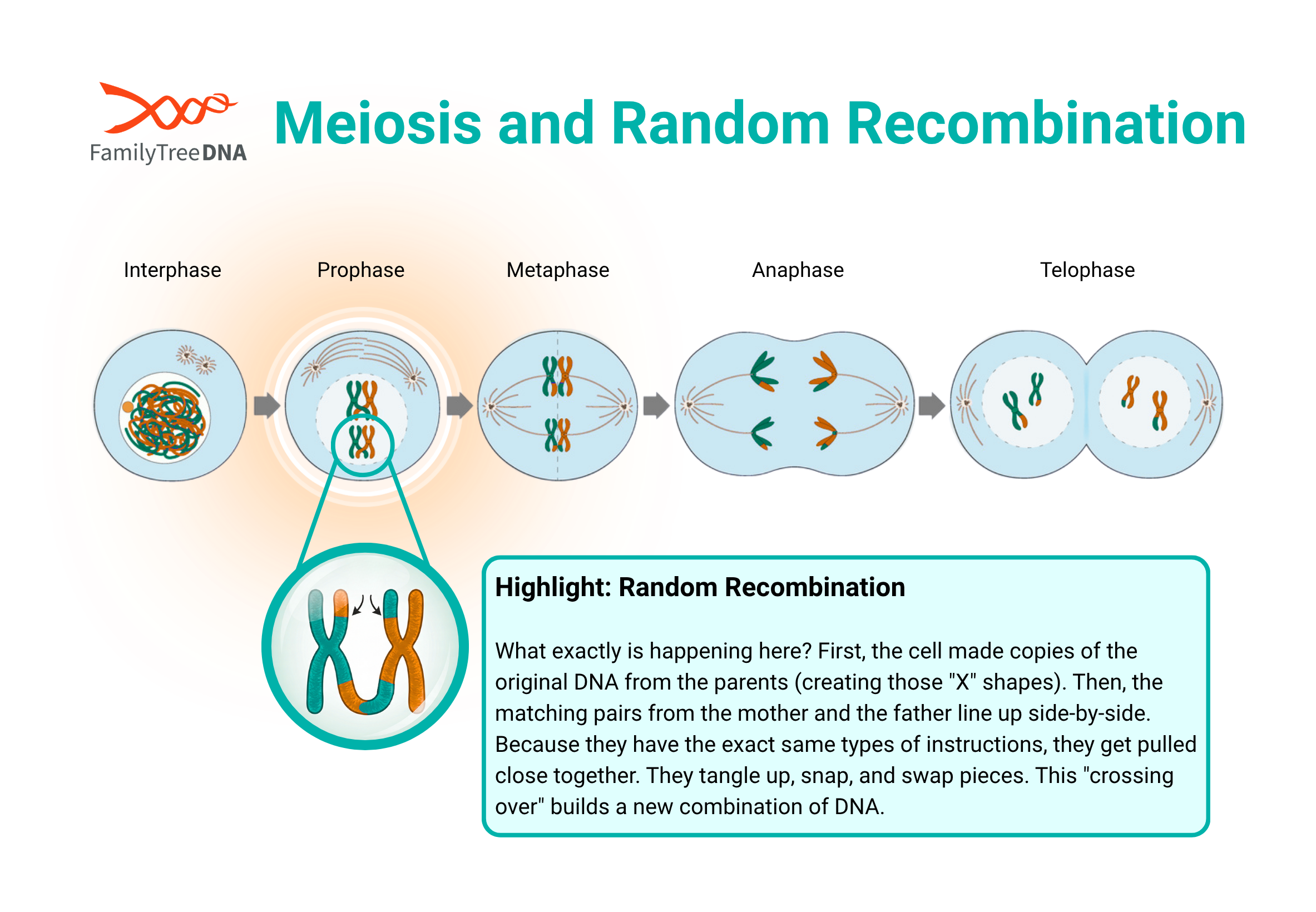
The random mixture of the two copies will be passed down to the child. Instead of getting “copy 1” or “copy 2” of the autosome from the parent, the child gets a mixture that’s made of both copy 1 and copy 2.
This process is replicated for all 22 pairs of autosomes.
What is the X chromosome and why is it inherited differently?
The X chromosome is not an autosome and has a different inheritance pattern. Genetic females will inherit an X chromosome from both parents. Genetic males will inherit an X chromosome from only their mothers.
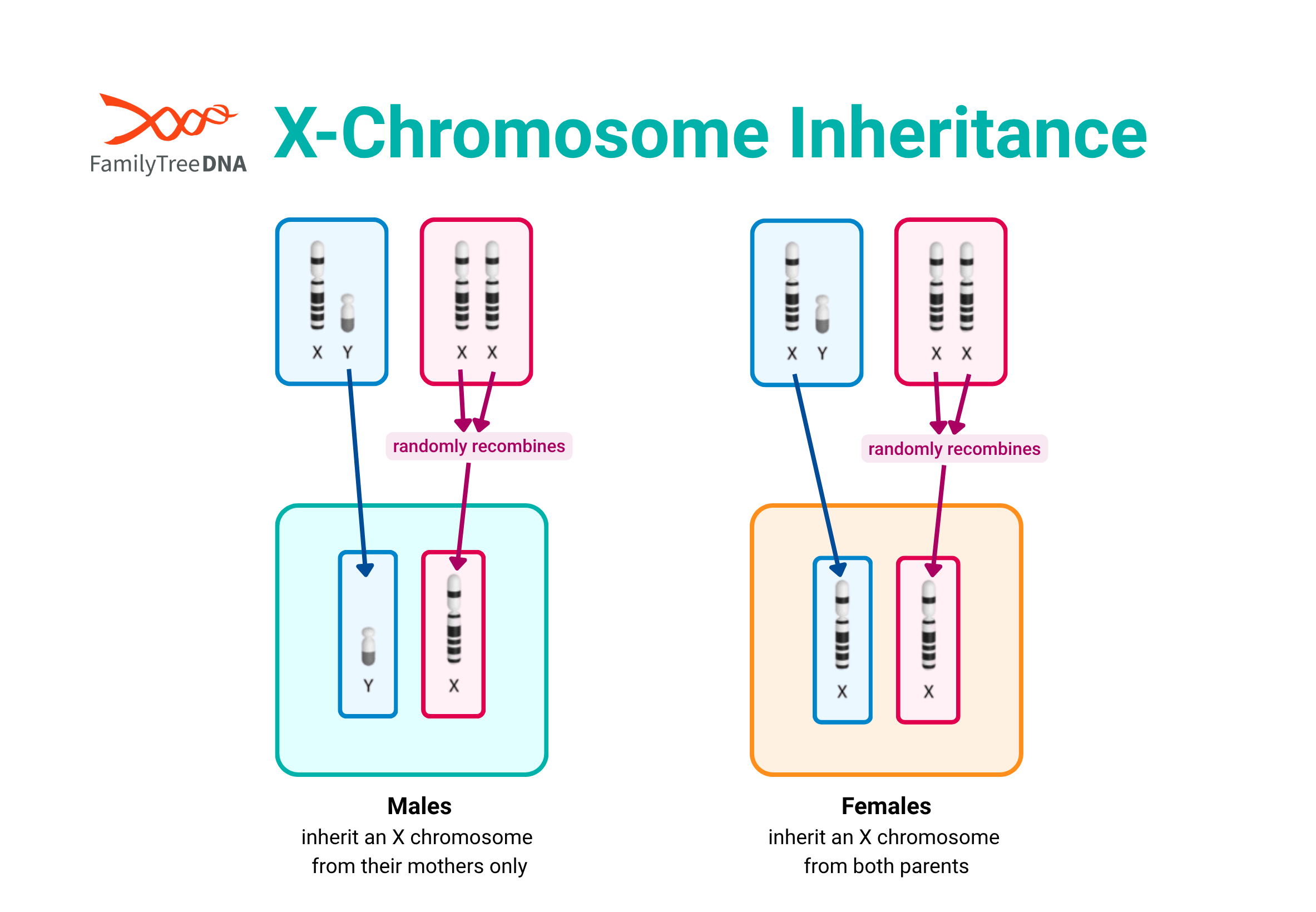
The X chromosome children inherit from their mothers will be a random recombination of their mother’s two X chromosomes, the same as for chromosomes 1-22.
The X chromosomes daughters inherit from their fathers do not go through random recombination because fathers will only have one copy of the X chromosome, so there is nothing to recombine with.
Because of this inheritance pattern, the X chromosome can sometimes help genealogists narrow down which ancestral lines a DNA match may come from.
How Far Back Can Autosomal DNA Go?
Because of random recombination, the amount of DNA inherited from distant ancestors becomes smaller each generation. After about five to seven generations, it becomes increasingly unlikely that detectable DNA from a specific ancestor will still be inherited.
This makes autosomal DNA testing a great resource to find close family members like parents or siblings or distant relatives like fifth cousins.
What Can Autosomal DNA Tell You?
Autosomal DNA can determine the likelihood of having certain traits, like hair color and eye color, or even if you dislike cilantro. They can be used for medical diagnostics or predictive testing to determine if you have or are likely to have a certain disease.
Carrier screening can look at autosomal DNA to examine your likelihood of passing down risks to your children. Paternity testing can use autosomal DNA to confirm or disprove parent/child relationships.
There can be some overlap in the autosomal locations used for medical testing and genealogical testing. For the most part, genealogical DNA tests (e.g. Family Finder), are not intended to diagnose or predict any medical conditions, and should not be used for such purposes.
How Autosomal DNA Helps Genealogy
Autosomal DNA tests are one of the most important tools for genetic genealogy. Because of its inheritance pattern, autosomal DNA can cover all recent ancestral lines. By matching you to closely related individuals, autosomal DNA tests can help adoptees discover their birth families and help non-adoptees discover more about their ancestral past.
A 2022 poll conducted by Ancestry found that less than half of Americans can name all four grandparents, and only 4% of Americans can name all eight great-grandparents. These relatives are part of the foundation of your family tree. Knowledge of these relatives can help you reach back further into your ancestral past, expand your family tree, and discover how and when your family travelled and where they came from.
For those who already know the names of their grandparents, great-grandparents, and beyond, and do know where their ancestors were from, autosomal DNA testing can confirm your genealogy research is correct by connecting you to others who share those same ancestors, and those connections can help you break brick walls and expand your family tree.
What Autosomal DNA Cannot Tell You
While autosomal DNA testing can reveal many insights about your ancestry, it also has important limitations. Understanding these limitations helps genealogists interpret DNA results more accurately.
- Exact ancestral locations: DNA tests cannot pinpoint the exact town or village where an ancestor lived. They estimate genetic similarity to reference populations, which represent broader geographic regions.
- Every ancestor in your family tree: Because of random recombination, you do not inherit DNA from every ancestor. After about 5-7 generations, some ancestors may contribute no detectable DNA at all, even though they are still part of your family tree.
- Your entire ethnic identity or cultural background: DNA reflects genetic inheritance, not cultural identity. Your ethnicity, language, traditions, and family history are shaped by many social and historical factors that DNA alone cannot fully explain.
- Exact family relationships without context: DNA can suggest possible relationships, but interpreting them often requires genealogical research and family trees. Two people may share the same amount of DNA, but have multiple possible relationships.
- Medical diagnoses (for genealogical DNA tests): Most genealogical DNA tests are designed for ancestry and family matching, not medical diagnosis. Health-related information should only be interpreted through tests designed and regulated for medical purposes.
Frequently Asked Questions About Autosomal DNA
What is autosomal DNA in simple terms?
Autosomal DNA is the DNA you inherit from both of your parents that represents most of your recent family history. It is found on the 22 pairs of autosomal chromosomes and includes DNA from many different ancestors.
What does autosomal DNA tell you about your ancestry?
Autosomal DNA can identify relatives who share common ancestors with you and estimate the regions where your ancestors likely lived in recent history.
Who inherits autosomal DNA?
Everyone inherits autosomal DNA from both parents. Each person receives about half from their mother and half from their father.
How is autosomal DNA different from Y-DNA and mtDNA?
Autosomal DNA comes from both parents and represents many ancestral lines. Y-DNA follows the direct paternal line, while mitochondrial DNA (mtDNA) follows the direct maternal line.
What relatives can autosomal DNA tests find?
Autosomal DNA tests can identify relatives ranging from close family members like parents and siblings to more distant cousins.
Autosomal DNA represents genetic contributions from many of your recent ancestors because it is inherited from both parents. This makes autosomal DNA testing one of the most powerful tools for identifying relatives and exploring family history.
Understanding what autosomal DNA is provides the foundation for interpreting your DNA results.
Next, we’ll explore how autosomal DNA testing works and how your DNA is analyzed to identify relatives and ancestry patterns.
